Dictionary: SPED
Why autistic children wander off
Wandering means a child leaves a safe place, or the care of the adult looking after them. Doctors and researchers often call it elopement, so you may meet that word in reports. This page calls it wandering.
It is common. In a US survey of the families of more than 1,200 autistic children, published in the US medical journal Pediatrics in 2012, 49% of parents, about one in two, said their autistic child had tried wandering at least once after the age of four. About a quarter of the children had been missing long enough to worry their parents.
The same study asked parents why. They could pick more than one reason, and these came up most:
- the child simply enjoys running and exploring
- they are trying to reach a place they enjoy
- they are trying to get away from a situation that makes them anxious
- they are trying to get away from a sound, sight or feeling that is too much
- they are following a special interest, a subject they love and know deeply, such as trains
The Kennedy Krieger Institute, a US centre for children with developmental disabilities, adds one more: some children wander off so that someone will chase them.
Why it matters. Among the children in the study who went missing, parents reported a close call with traffic for 65%, about two in three, and a close call with drowning for 24%, about one in four. A close call means the child was nearly hurt. Those are the two dangers to plan around, and the rest of this page turns them into steps.
Why it is not your fault. The study found that the brothers and sisters of the autistic children wandered far less. Its authors wrote that it is doubtful these parents, as a group, are failing to keep their children safe. Many of the families lost sleep, or gave up outings, because of it.
Know your child’s pattern
A plan starts with your own child, not a list. Once you know what pulls your child away and what pushes them, you can see the next time coming.
Think back to any time your child has wandered, or tried to. Write down where you were, what happened just before, and where they went. SPARK for Autism, a US autism research programme, says children often wander towards things they like, so a parent who knows the pull can offer something else in its place.
| The reason | In Singapore, it might be | What you might notice first |
|---|---|---|
| A place or thing they love | The MRT tracks, a lift, a fountain, the condo pool, a favourite shop | Your child knows the way there, or stares towards it |
| A special interest | Train numbers, bus routes, escalators, signs | Your child goes quiet and fixed on it just before moving |
| Too much noise or light | A mall atrium, a hawker centre at lunch, a train arriving | Hands over ears, looking for a way out, rising distress |
| An anxious moment | A queue, a change of plan, a crowd closing in | Your child pulls at your hand or freezes first |
| The fun of running | An open corridor, a void deck, a park path | A grin and a glance back at you before they go |
Water belongs at the top of your list even if your child has never gone near it. SPARK notes that most deaths after an autistic child wanders off are related to drowning.
If you are not sure why your child wanders, a therapist who works with your child can help you find out. The Kennedy Krieger Institute says many parents get little support with wandering, although behaviour-based therapy has been shown to reduce it. That is therapy that teaches a child new habits in small, planned steps, and our guide to the main autism therapies in Singapore explains what each one does.
Safer at home
SPARK suggests three things for the home:
- Locks or alarms on doors and windows. In a flat, start with the main door and the gate. A lock your child cannot open, or a battery alarm that chimes when the door opens, tells you the moment it moves.
- A picture cue on the door. A picture cue is a sign that reminds your child of a rule. One parent in SPARK’s article put STOP signs on every outside door, to remind her son of the rule that he waits for her.
- A way to ask. SPARK says it can help to teach a child to ask for what they want, for example with a card they hand to a parent when they want to go somewhere. A child who can ask to go to the playground may have less reason to go alone.
Water needs its own step. SPARK quotes a psychologist who says the best way to prevent drowning is to teach children to swim, and the lessons can include staying out of the water until it is time to get in. If you live near a pool, ask the swim school whether its coaches have taught autistic children before.
Malls, MRT stations and crowded places
SPARK says a new place can raise the risk, because it has none of the locks or alarms you rely on at home. So it suggests planning a stand-in for each one, even if that is only closer watching. A plan for a mall trip can be short.
Before you go.
- Tell your child where you are going and what will happen, in the order it will happen. A visual schedule, a row of pictures showing what comes next, can show it. So can a social story, a short story told from your child’s point of view about what will happen. Our guides show how to make a visual schedule and how to write a social story.
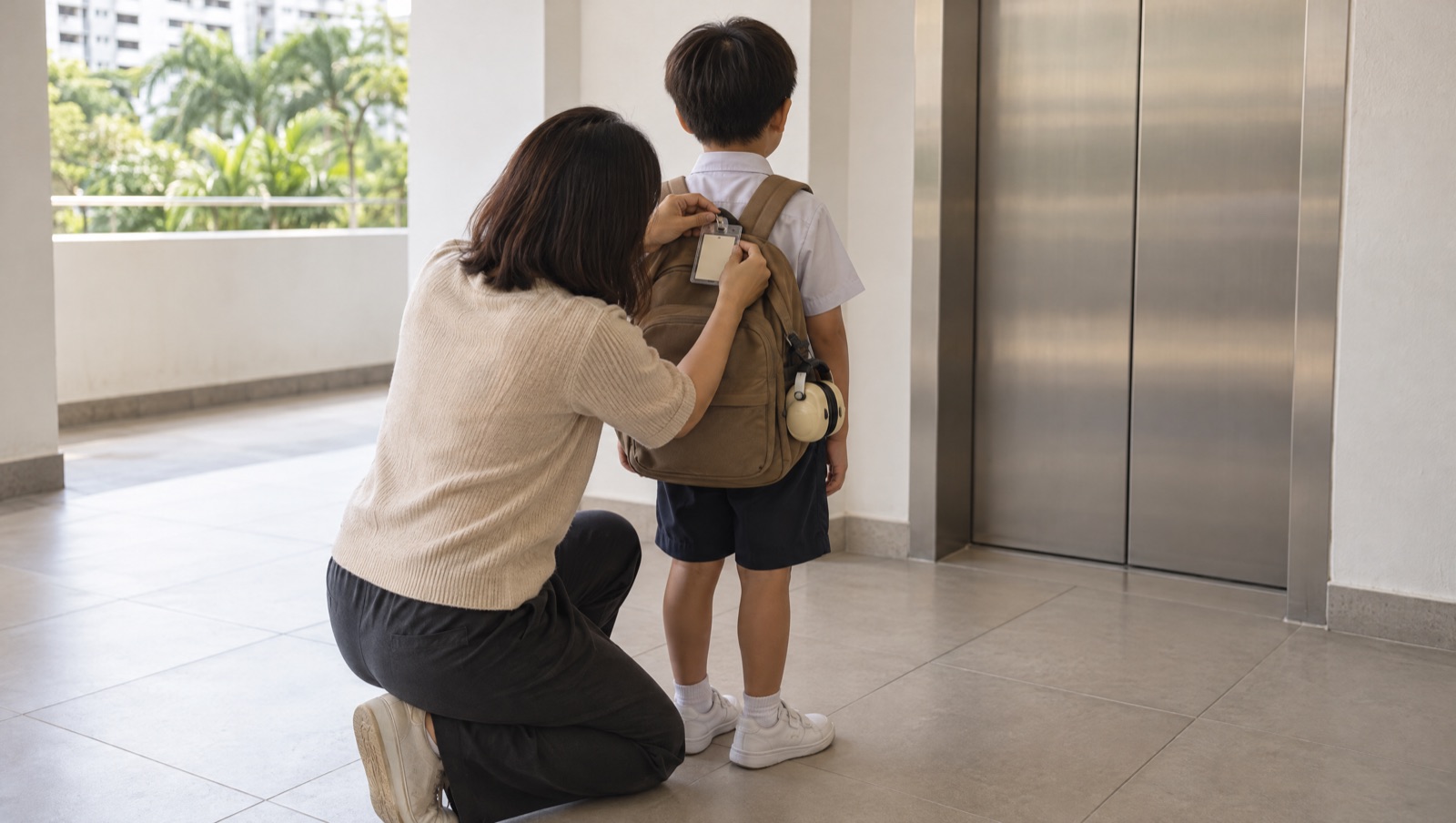
- Pack what helps your child cope with noise and crowds, such as ear defenders (earmuffs that block out noise) or a favourite fidget toy (a small toy that keeps the hands busy). Our guide to sensory strategies for daily life helps you work out what overwhelms your child and what soothes them.
- Pick a quieter time if you can, and a shorter visit than you think you need.
When you arrive.
- Take a photo of your child on your phone. It shows exactly what they are wearing today, which anyone searching for them will need.
- Agree which adult is watching your child at each moment, and say it out loud when you hand over. That way there is never a moment when each adult thinks the other one is watching.
- Hold hands, or keep your child on the side away from the road, the platform edge and the escalator.
While you are there. Watch for the signs in your table above. Leaving early, before the overload peaks, is part of the plan, not a failure of it. If your child reaches a meltdown, the point where it all becomes too much, our guide to managing autism meltdowns covers what helps in the moment.
SPARK also describes teaching children to walk beside an adult, and to stop when they hear “stop” or “come here”. One parent in its article spent months teaching her son what “stop” means. When he later ran for a side door at a cinema, he stopped at her call. Training like this takes time, and a therapist can help you build it step by step.
ID your child can carry, and what to write on it
If your child is found before you find them, the person who finds them needs one thing: a way to reach you. A phone number on your child gives them that directly.
In 2020, a 15-year-old autistic boy was separated from his family’s helper when the train doors closed at Punggol MRT station. He was found at VivoCity. A staff member at the mall who stopped to help looked at the lanyard the boy wore, but could not find any contact number on it. He worked out the boy’s school from his uniform and called the school. The boy’s mother was making a police report when the school rang her.
That lanyard was already on the boy. One line on it could have reached his family straight away. So whatever your child already wears or carries, add your number to it.
What to write. Keep it short and in large print:
- your child’s first name
- “I am autistic”, or the words your family uses
- one or two parent phone numbers, with “Please call my mum” or “Please call my dad”
- how your child communicates, such as “I may not answer to my name” or “I use a tablet to talk”
- one line on what calms your child, if there is room
SPARK says a clinician it quotes teaches children to say their name and contact details, or to hand an adult a card with that information, when they are lost. If your child does not speak, a card they can hand over is the same idea. Our guide to helping a non-speaking child communicate has more on giving your child the words.
| Option | Good for | Check |
|---|---|---|
| A card in a lanyard or bag tag | A child who already wears a school lanyard or carries a bag | The number is on the card itself, not only the school’s name |
| An ID bracelet | A child who drops bags or takes off lanyards | Your child will keep it on; try it for a week at home first |
| A label sewn or ironed into clothes | A child who will not wear anything extra | It sits where a helper would look, such as inside the collar |
| The universal Helping Hand card | Asking other commuters for help on the MRT or bus | It is not an ID; add your number to the back if your child wears one |
The Helping Hand card is not an ID. Caring SG Commuters, a government movement on public transport, gives out yellow Helping Hand cards for commuters with hidden or invisible medical conditions, the kind other people cannot see. You can get them at the Passenger Service Centres, the staffed counters at MRT stations and bus interchanges, and at the SimplyGo Ticket Offices at six MRT stations. The Minister for Transport described them in February 2025 as a way to get help from fellow travellers, using a lanyard with a card that describes the wearer’s needs.
The universal card is the one for needs the other Helping Hand cards do not cover, and it leaves space on the back for the wearer to write the help they need. That makes it a good place to add “If I seem lost, please call my parent” and your number. On its own, though, it does not tell anyone who your child is or how to reach you.
Some families also ask whether their child needs a “disability card”. No Singapore scheme is actually called that. Our guide to which “disability card” your child actually needs in Singapore explains the three schemes that go by the name.
Tracking devices that a child wears also exist, and SPARK mentions them beside ID bracelets. They are products, and this page names none. A number your child carries works with or without one.
Telling school and transport staff
The people who see your child every day have the best chance of spotting wandering before it starts, once they know the pattern.
At school. Ask for a short meeting with the form teacher in a mainstream school, or the class teacher in a special education (SPED) school. Bring the notes from your pattern table. Tell them:
- what pulls your child away and what pushes them
- what you have seen just before your child wandered
- what calms your child, and what makes it worse
- who collects your child, and what happens if that person is late
- your phone number, and who to call second
Ask the school how it keeps track of your child at the gate, at recess and on trips. If your child takes a school bus, give the same short note to the driver or the bus attendant.
On your regular route. Walk your child’s usual route with them, at the time they usually travel. Point out the station staff, the Passenger Service Centre and where to wait. If a helper takes your child to school, make sure the helper has the photo, the note and your number too. In the VivoCity case, the boy had been travelling with the family’s helper.
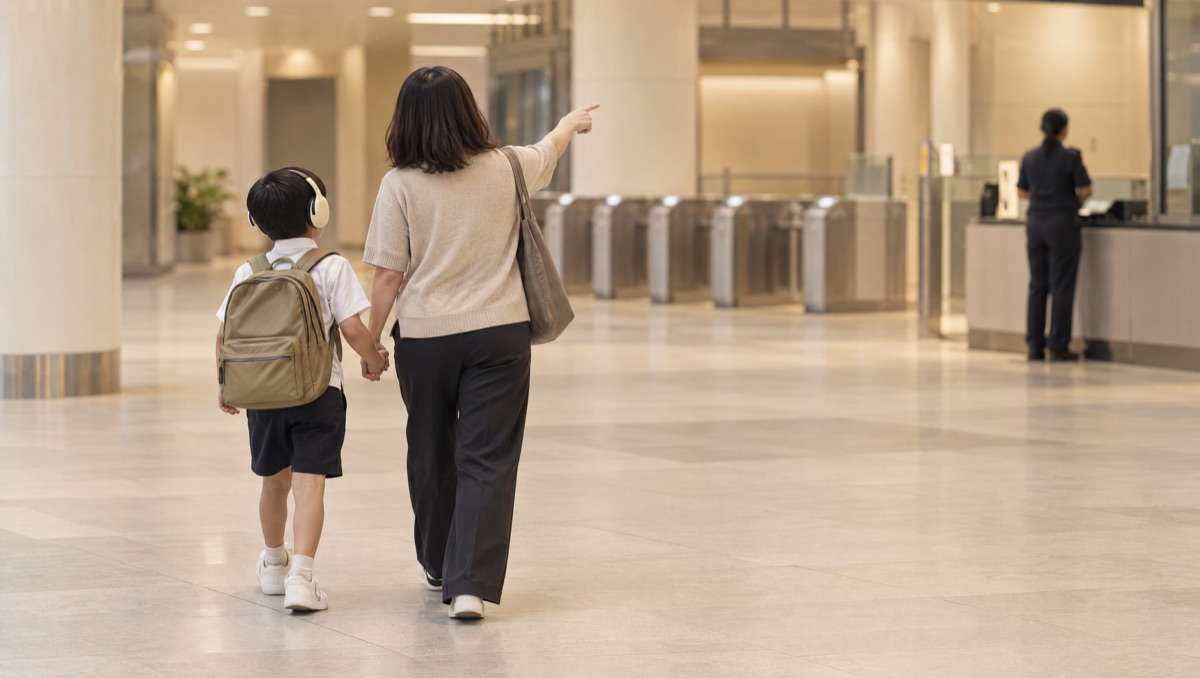
At the MRT and bus interchange. Station staff can help a lost child, and a case the train operator SMRT shared on 30 September 2026 shows how. A commuter alerted staff to a 16-year-old with special needs who seemed lost and alone at Holland Village MRT station. He looked anxious and disoriented, so the station manager and the assistant station manager took him to a room in the station called the WeCare Room. They put plasters on the blisters on his feet, and offered him soft toys and drinks. When he stayed quiet, the assistant station manager sang the ABC song to him, and he smiled.
Meanwhile her colleague alerted SMRT’s control centre and colleagues across the rail network. He then spotted a social media post about a missing person and realised it could be the teen. It was. The teen was back with his father about two hours after he was found.
Two lessons from that story. Teach your child that a person in a station uniform is someone to go to for help. And a recent photo, shared quickly, is how strangers recognise your child.
The Sensory Tool Kit. In February 2025, the bus and train operator SBS Transit announced a trial of a sensory tool kit for passengers with autism, run with the Land Transport Authority (LTA) and the other public transport operators. The kit is a set of items to help a passenger calm down when noise, light or crowds are too much. It holds things such as earmuffs, visual timers (clocks that show time running out), interactive books and fidget tools. Passengers with autism and their caregivers can ask the staff at the Passenger Service Centre to borrow it at no charge. SBS Transit said its staff would be trained in autism awareness. The trial started at seven places:
- Bedok, Tampines and Yio Chu Kang bus interchanges
- Hougang, Buangkok, Bedok Reservoir and Tampines (Downtown Line) MRT stations
That list dates from the trial’s start, so ask at your station’s Passenger Service Centre whether it has a kit before you count on one.
If your child goes missing: the first minutes
If it happens, act at once. Nothing in the police’s guidance asks you to wait before you call. For a missing person, the Singapore Police Force says to call 999 or go to a Neighbourhood Police Centre. For missing vulnerable people, which include young children, the Home Affairs Minister told Parliament in October 2025 that police aim to arrive within 15 minutes of the report.
- Call 999. Say your child is autistic, their age, what they are wearing, how they communicate and where you last saw them. In 2022, the Home Affairs Minister said police interview the person who made the report about the missing person’s background and how they were last seen.
- Tell the staff nearest you. In a mall, that is the security or customer service counter. In an MRT station, it is the station staff or the Passenger Service Centre. Ask them to alert their colleagues.
- Search the pulls first. Check any water nearby, then the places your child loves, the ones in your pattern table.
- Send the photo and the note. Give police the photo you took today and the short note about your child. Police review CCTV (security camera) footage where it is available, and with the family’s consent may put out an appeal online for the public’s help.
- Keep one adult in place. One person stays where your child was last seen, or at home, in case your child comes back.
When your child is found, they may be frightened, overloaded or unable to tell you what happened. Hold off the questions. Get them somewhere quiet first, and write down later where they were found. It belongs in your pattern table.
What to do next
Do one thing today: put your phone number on an ID your child will wear or carry. Use the lanyard, the bag tag or the label they already have.
Then save two things on your phone, ready for the police or station staff:
- a current photo of your child, updated when their hair or size changes
- a short “about my child” note: their name, age, how they communicate, whether they answer to their name, what they are drawn to, and what calms them
If your child goes missing, call 999 at once. There is no wait.
The slides below hold the “about my child” note and the first-minutes steps on a few pages, to keep on your phone or print for the school and your helper.
Read the slides as words
- If my child wanders off: a plan for our family: For a parent whose autistic child has slipped away before.; Fill it in once. Keep it on your phone. Give a copy to the school and your helper.
- About my child: Name:; Age:; How my child communicates:; Does my child answer to their name?; What my child is drawn to:; What calms my child:; Parent phone numbers:; Keep a current photo beside this note.
- What pulls my child away, and what pushes: Places or things my child loves: water, trains, lifts, a favourite shop; Special interests to watch for; Noise, light or crowds that are too much; Anxious moments: queues, changes of plan; The fun of running, or being chased; Water goes at the top of the list.
- The ID my child carries: First name; "I am autistic", or our family's words; One or two parent phone numbers; How my child communicates; One line on what calms my child; Put it on what my child already wears: a lanyard, a bag tag, a bracelet or a label.
- Before an outing: Tell my child the plan, in pictures if that helps; Pack ear defenders or a fidget toy; Take a photo of my child on arrival; Say out loud which adult is watching; Leave early if overload is building
- If my child goes missing: Call 999 at once. There is no wait.; Say: my child is autistic, their age, what they are wearing, how they communicate, where I last saw them.
- Then, straight away: Tell the nearest staff: mall security, station staff or the Passenger Service Centre; Search water nearby first, then my child's favourite places; Give police the photo and this note; One adult stays where my child was last seen, or at home
- When my child is found: No questions yet; Somewhere quiet first; Later, write down where my child was found
Questions parents ask
Why does my autistic child keep wandering off?
In a large US study, the reasons parents gave most often were the joy of running and exploring, trying to reach a place the child enjoys, and getting away from anxiety or from noise and other sensations that are too much. Some children also wander off so that someone will chase them. Noting where your child goes, and what happened just before, can show which it is.
Do I have to wait 24 hours before I report my child missing in Singapore?
No. The Singapore Police Force says to call 999 or go to a Neighbourhood Police Centre for a missing person. For missing vulnerable people, which include young children, police aim to arrive within 15 minutes of the report.
What should my autistic child’s ID say?
Your child’s first name, “I am autistic” or your family’s own words, one or two parent phone numbers, and how your child communicates, such as “I may not answer to my name”. Put it on something your child already wears or carries.
Is the Caring SG Commuters lanyard an ID?
No. The Helping Hand cards help commuters with hidden conditions ask fellow travellers for help. The universal card has space on the back to write the help needed, so you can add your number there, but the card is not an ID on its own.
Can MRT staff help if my child is lost or overwhelmed?
Station staff can help. Go to them or to the Passenger Service Centre. In a September 2026 case, SMRT staff looked after a lost teen with special needs and alerted colleagues across the rail network until he was back with his father. Some stations and bus interchanges have also trialled a free sensory tool kit of calming items, such as earmuffs, that you can borrow, so ask whether yours has one.