
Dictionary: KKH DCD · CHAS · EIPIC · SG Enable
What MediSave pays for, cost by cost
Here are four bills a family may face after an autism referral, where MediSave stands on each, and where to look when the answer is no.
| The bill | MediSave? | Why | Look here instead |
|---|---|---|---|
| Autism assessment, at a public hospital or a private clinic | No | Autism is not one of the 23 conditions on MOH’s chronic disease list | The government subsidy on a referred assessment at a public hospital, then the medical social worker if the bill is still too much |
| Speech therapy, occupational therapy or early intervention for autism | No | Under the chronic disease list, MediSave pays for these therapies only when a doctor refers them for a listed condition | EIPIC or EIPIC-P subsidies, which are means-tested. Singapore Citizens can also use Baby Bonus, the government’s cash gift and child savings scheme, toward EIPIC and EIPIC-P fees |
| Medicine | Depends | Yes when prescribed for a condition on the list, such as anxiety. Not for autism alone | Ask the clinic which condition the prescription is claimed under |
| A hospital stay | Yes, within limits | MediSave pays hospital bills for you and your approved family members, up to daily limits | The hospital’s financial counselling, and MediShield Life for large bills |
Your own bill may differ, so use the table to decide what to ask. If a clinic tells you MediSave can pay, ask which scheme the claim goes under and for which diagnosis. Ask before you pay, because the answer decides whether the money comes from your account or your wallet.
One name to keep apart from MediSave is MediShield Life. MediShield Life is national insurance that helps with large hospital bills and selected costly outpatient treatments. MediSave is your own savings, and it can pay the MediShield Life premiums.
Why autism is not on the list
The list is the Chronic Disease Management Programme, or CDMP. It is MOH’s scheme, started in 2006, that lets MediSave pay part of the outpatient bills for long-term conditions, meaning care at a clinic rather than a hospital ward.
If your child’s condition is on the list, MediSave can pay. If it is not, this route is closed.
The CDMP list on MOH’s site has 23 conditions. Most are physical, such as diabetes, asthma and epilepsy. A few are mental health conditions, including anxiety, major depression, bipolar disorder and schizophrenia.
Autism is not there, and neither is ADHD, attention deficit hyperactivity disorder.
For a condition that is on the list, HealthHub, MOH’s patient site, says MediSave can pay for doctor’s visits, tests, medicine, and allied health services such as occupational therapy and speech therapy, when the doctor refers them. So the therapies your child may need are on the list of services. Autism is just not on the list of conditions.
MOH’s advisory committee reviews the list from time to time. Answering a question in Parliament on 6 February 2024, MOH said the committee weighs how common a condition is, how much early intervention helps, and whether there are evidence-based clinical guidelines for its care. It also said requests from the public, doctors and Members of Parliament are taken into account.
MOH’s pages linked here give no reason for leaving autism off in particular.
The closest is an older reply, from May 2016, about ADHD. It said ADHD “is less common at the population level” and so was not covered. That reply was about ADHD, not autism, and it predates the current list.
Being off the list says nothing about how much support your child needs. It is a funding rule, and funding rules change.
Yes, your own MediSave can pay for your child
The family part of the question has a simple answer. CPF Board says you can use your MediSave for your spouse, children, parents, grandparents or siblings.
Your child can be of any nationality. Only grandparents and siblings have to be Singapore Citizens or Permanent Residents.
Using your account does not widen what MediSave pays for. Your child’s bill still has to be one that MediSave covers. The family rule decides whose account can pay, and the scheme rules decide what it can pay for.
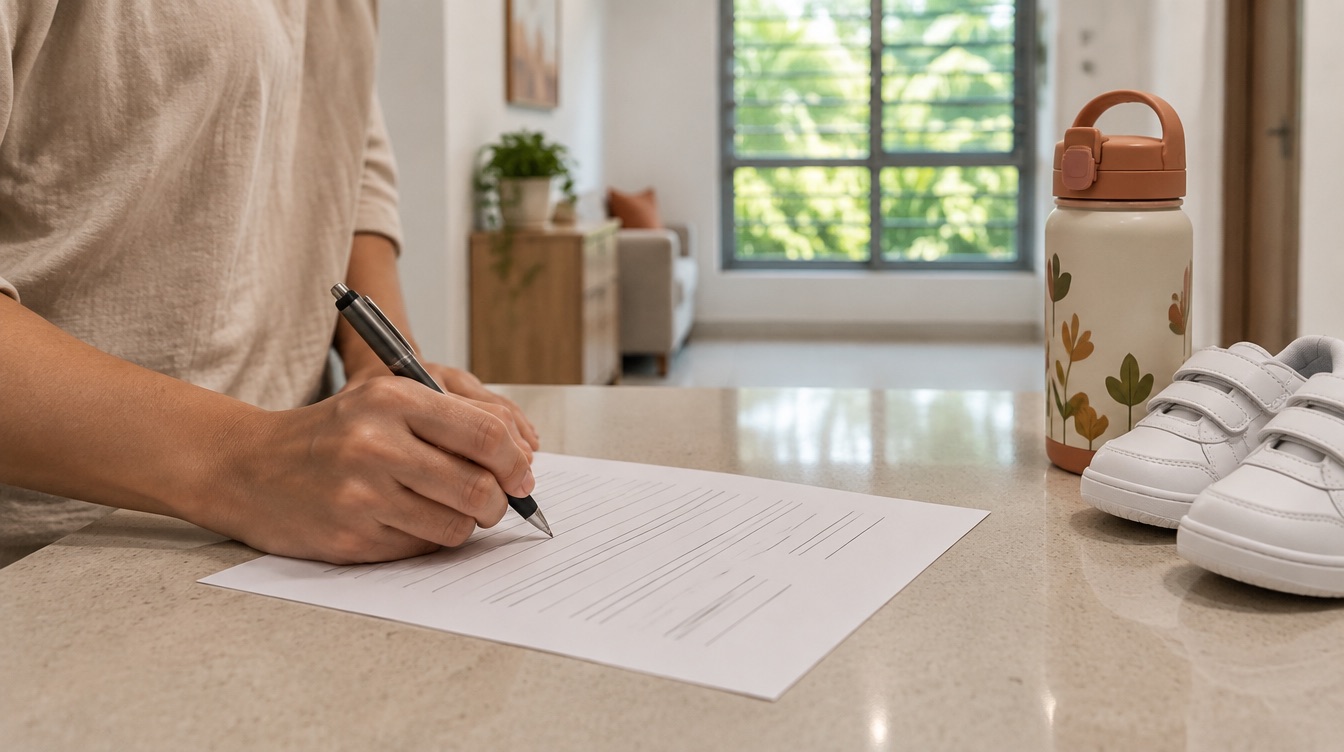
The paperwork is one form, the Medical Claims Authorisation Form, or MCAF. Signing it lets the clinic or hospital check your MediSave and claim from it for you.
There are two versions, and when the patient is your child, MOH says you must use the single one, MCAF(S). It covers one clinic, for one course of treatment or a set period.
- Tell the clinic or hospital, before the treatment, that you want to pay with MediSave.
- Say the account is yours and the patient is your child, and sign the MCAF(S) they give you.
- After the treatment, the clinic sends the claim to CPF Board and is paid straight from your account. When the claim is approved, CPF Board lets you know.
For a hospital stay at KKH, KK Women’s and Children’s Hospital, the hospital asks you to fill in the MCAF during financial counselling. You can cancel an MCAF at any time by asking the clinic or hospital that holds it.
Private clinics and private hospitals
Going private does not change the answer for autism. It only changes where MediSave can be used.
MediSave works at every public hospital and polyclinic. It also works at private clinics and private hospitals that are MediSave-accredited, which means MOH has approved them to make MediSave claims.
So a private clinic may well be able to take MediSave. But an autism assessment or autism therapy there is still not for a listed condition, so the chronic disease route still does not apply.
If a private clinic says otherwise, ask it the same question as in the table: which scheme, and which diagnosis.
A hospital stay is different, because MediSave pays hospital bills for your approved family members. That holds at an accredited private hospital too, within MediSave’s withdrawal limits.
MOH says the limits are generally enough to cover most charges in subsidised wards. A private hospital bill is therefore more likely to leave a part you pay in cash, so ask for an estimate first.
When your child also has a condition on the list
Anxiety is on the CDMP list. So if a doctor has diagnosed your child with anxiety as a condition of its own, the programme’s rules apply to that anxiety as they would for anyone.
Visits and medicine for the anxiety can be paid from MediSave, and so can allied health services the doctor refers for it, such as occupational therapy. MOH’s pages linked here do not say whether a psychologist’s sessions count, so ask the clinic before you book them. Care for the autism itself still cannot.
No MOH page says this about autism in so many words. It follows from two MOH rules.
HealthHub says MediSave pays for the care of a listed condition and its complications. And MOH’s definition of a complex case, treatment for two or more listed conditions in one visit, counts the conditions one by one. What MOH’s pages linked here do not spell out is how a clinic splits one visit that covers both.
So ask the clinic. It is the one that makes the claim, and MOH says your clinic can check your MediSave balance under the programme for you. This is about care your child already needs, not a reason to look for a second label.
How much MediSave you can use in a year
For clinic care under the list, the scheme is called MediSave500/700. As of September 2026, a patient can use up to S$500 a year, or up to S$700 a year for a complex case. Complex means a visit that treats two or more listed conditions, or one listed condition with a recognised complication.
The limit belongs to the patient, not to the account. If your child is the patient, it is your child’s yearly limit, whichever family member’s MediSave pays.
Each claim also leaves 15% for you to pay in cash. That cash part is waived at a patient’s enrolled Healthier SG clinic, meaning the family clinic they signed up with under MOH’s Healthier SG programme. But as of September 2026, only Singapore Citizens and Permanent Residents aged 40 and above can enrol, so for your child, plan to pay the 15%.
Hospital stays have their own limits. At KKH, as of September 2026, MediSave can pay up to S$1,130 a day for the first two days of a stay and S$400 a day from the third day, for the daily ward charges.
When MediSave cannot pay: who to ask
For the assessment, the main help is the government subsidy on a referred assessment at a public hospital, such as KKH’s Department of Child Development. What it covers, and what you pay after it, is set out in our assessment cost guide. How to get the referral is in our guide to getting an autism diagnosis.
For therapy, the main route is early intervention. EIPIC, the Early Intervention Programme for Infants and Children, and its private-centre track EIPIC-P both carry means-tested subsidies, so what you pay depends on household income. Our guide to the main autism therapies explains what each one does.
SG Enable’s Enabling Guide says Singapore Citizens can also use Baby Bonus money toward EIPIC and EIPIC-P fees. Baby Bonus is the government scheme that gives parents a cash gift and a Child Development Account, a savings account for approved child-related costs. The government announced at the 2026 National Day Rally that a new SG Child Support Package will replace Baby Bonus, and children already enrolled will move to it automatically.
CHAS, the Community Health Assist Scheme that subsidises care at GP clinics, follows the same CDMP list for ongoing care. So its chronic care subsidy does not open a route for autism either.
If the bill is still too much after subsidies, the person to see is the medical social worker at the hospital or centre where your child is seen. They are also the way into MediFund, MOH’s safety net for bills still unpaid after subsidies, insurance and MediSave.
MediFund Junior is the part of MediFund set aside for children. MOH says a MediFund application is “assessed holistically, taking into consideration you and your family’s financial, health and social circumstances”.
MediFund has four conditions. The patient must be a Singapore Citizen and a subsidised patient, meaning seen at the government-subsidised rate, for example after a polyclinic referral. They must be treated at a MediFund-approved institution, and the family must still have trouble paying after subsidies, insurance and MediSave.
The social worker also looks at other ways to pay with you. In MOH’s words, “No Singaporean will be denied access to appropriate healthcare due to an inability to pay.”
Your next step
Before you pay an assessment or therapy bill, ask the medical social worker at the hospital where your child is seen which schemes apply to it. If your child is seen privately, ask the clinic which scheme, if any, the bill can go under.
Bring the bill or the quote with you. Then read our guide to what an autism assessment costs in Singapore, so you know the numbers before the appointment.