
Dictionary: SPED · MOE · SG Enable · MINDS
What “private special needs school” means here
A private special needs school in Singapore is a school for children with special needs that takes no MOE funding for its students, sets its own fees, and runs its own intake. It answers to the Skills and Workforce Development Agency (SWDA) as a private education institution rather than to MOE.
That is not the same thing as a SPED school. SG Enable, the government’s disability guide, lists special education schools under the heading “Government-funded Special Education (SPED) schools”, and those schools follow the MOE SPED Curriculum Framework.
Watch the words on other pages, because they mix. “Private” and “privately run” describe who runs a school, not who pays for it. The school named below calls itself “a privately run institution”, and SG Enable’s heading for the other kind of school names who funds it. So a page that tells you a school is private has not told you whether MOE pays for it. Ask who funds the school.
One named example, so you can hear what a private school’s own claims sound like. Saint Clare School, on its own homepage, says it was founded in 2007 and that it remains “a privately run institution” catering “exclusively to children with special needs”. It says it is “among the few specialist schools with an EduTrust certification”, and it publishes a ratio: “an average class size of 12 and a faculty staff for every 4 Students”, supported by a resident occupational therapist and speech therapist. Read at https://saintclare.com.sg/ on 1 October 2026. Every one of those is the school’s own claim about itself, and the pattern is the one to expect: certification, a class size, a staff ratio, and named therapists. Check each of them at the visit.
If your child did not get a SPED place
MOE expanded SPED capacity in its announcement of 3 March 2026: the plan “will be able to serve around 30% more SPED students, from 9,000 students today to about 12,000”, carried out “from the second half of 2026 through the early 2030s”. As part of that, MOE says it “is studying the establishment of three new ASD-ID schools”, schools for students with autism and intellectual disability. MOE adds that, with those three schools, the number of SPED schools serving students with ASD-ID “will increase from 13 to 16”.
The first of the extra places come through additional campuses for three MINDS SPED schools: Fernvale Gardens and Lee Kong Chian Gardens from the second half of 2026, and Towner Gardens from 2027. A fourth MINDS school, Woodlands Gardens, “will relocate to a larger interim site in the North region from 2027”.
So if your child is waiting, the free road is widening. It is also the road where MOE decides the place. If your child is a Singapore Citizen or Permanent Resident, or a Returning Singaporean, you do not apply to a SPED school directly: you apply through MOE’s online form, you list up to 3 schools, and each school serves students with a particular primary diagnosed condition. MOE asks you to start preparing at least a year before your child’s admission. For a child who is not a Citizen, the route is different, and the next section covers it.
Private is not the alternative to waiting. For most families it is the alternative to a place that does not fit yet, at a price set by the school rather than by MOE.
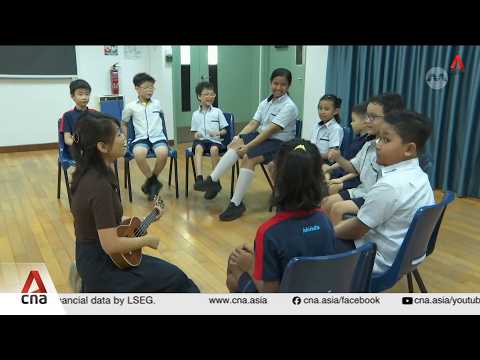
Watch on YouTube: Singapore to open three more special education schools by early 2030s, by CNA.
That is the CNA report on MOE’s 3 March 2026 announcement, the same release the figures above come from. It is here so you can hear the announcement in the newsroom’s own words rather than a parent’s summary of it. The numbers to act on are in the paragraphs above.
If your child is not a Singapore Citizen
The first thing to know is that a private school is not your only route. MOE’s SPED application page says: “International students can approach the SPED schools directly to enquire about their admission processes and vacancies.” That is MOE’s own sentence, and it sits on the page that describes the online application route for Citizens and Permanent Residents.
For a private school, the hard test is immigration, and it is sharper than registration:
- A foreigner offered a place at a privately-funded school needs a Student’s Pass, unless they already hold a valid Dependant’s Pass, Long-Term Visit Pass or Immigration Exemption Order. ICA says so on the same page.
- “Only EduTrust-certified PEIs can offer placements to foreign students”, ICA says.
- “A Student’s Pass will not be issued to foreigners enrolled in PEIs that are not EduTrust-certified.”
So if your child’s class depends on a Student’s Pass, EduTrust is not a nice-to-have. Ask for the certificate and check it, before you pay a deposit.
Timing matters too. A new Student’s Pass application goes in “at least two months and not more than three months before your course begins”, and a transfer to a different school “at least four weeks before your new course begins”. The processing fee is S$45 as of October 2026 and is not refunded.
The other paid road is an international school. SG Enable notes that some foreign system schools cater to students with special education needs, but they “are intended primarily for expatriates’ children”, and Singaporeans who wish to enrol “will need to seek approval from MOE”. Learning disabilities may be a factor in that decision.
If a smaller class is the reason
Then price is not the only thing to compare. A private school sets its own class size and its own staff ratio and publishes them if it wants to. A government-funded SPED school also has smaller class sizes and specialised staff, and SG Enable’s list of what a SPED school offers includes smaller class sizes for personalised attention, therapists and psychologists, and spaces such as sensory modulation rooms.
The honest way to compare is to ask both schools the same six questions and write the answers down side by side. You will find quickly that the difference between them is not class size. It is who decides the place, what it costs, and what happens to the money you have already handed over.
SPED school or private school: what changes
| Question | MOE-funded SPED school | Private special needs school |
|---|---|---|
| Who pays for the teaching | MOE funds it; a social service agency runs it | Nobody funds it. The school sets the fee and takes the risk |
| Who decides the place | MOE, through one online form, up to 3 schools, matched to a primary diagnosed condition | The school, on its own intake and its own criteria |
| Curriculum | The MOE SPED Curriculum Framework, which each school can customise | Whatever the school publishes. Ask to see it before you sign |
| Class size and staff | Smaller classes, plus therapists, psychologists and specialist rooms | Set by the school. Ask for the number and the ratio, in writing |
| What you pay | SPED school fees, set by MOE, with financial help for lower-income families. See our SPED school fees page | Fees the school sets. Ask for the current schedule, with its date |
| Compulsory education | MOE’s route for children who must undergo it | Ask the Compulsory Education Unit whether an exemption is needed for your child |
| If the school cannot run | MOE-funded, so the placement is not a private contract | Fee protection depends on the school’s registration and its insurance. See the next section |
What it costs, and what protects the money
Every private school sets its own fees. There is no table you can compare across schools, so the number you get is the number on that school’s own schedule. Ask for it in writing and check the date printed on it, because a fee schedule is the first thing that goes stale.
What you can check is how much a school may take from you before your child has started. The Skills and Workforce Development Agency sets fee collection caps, and they differ with the school’s registration:
| Fee protection the school holds | Months of course fees the school may collect at one time |
|---|---|
| No fee insurance scheme | 2 months |
| Industry-Wide Course | 6 months |
| EduTrust certified | 12 months |
It works like this. A private education institution that subscribes to no fee insurance scheme “are allowed to collect up to two months of course fees from students at any one time”. One that subscribes to the Industry-Wide Course (IWC) insurance “are allowed to collect up to six months of course fees at any one time”. An EduTrust-certified one “are allowed to collect up to twelve months of course fees at any one time”.
That is the number to argue with. If a school asks for a year up front and holds no EduTrust certification, you know exactly which rule it is outside.
For what happens to fees you have already paid, the regulator runs a Fee Protection Scheme. It protects “the unconsumed course fees paid by students in the event that a PEI is unable to continue operating”. Fee Protection is “one of the two pre-requisites that PEIs have to meet in order to apply for EduTrust certification”, and SWDA says students in EduTrust-certified schools “can check their Fee Protection Scheme status with their school or insurance provider”.
So ask two questions at the visit. Which scheme covers this school, and what is the certificate number. Then check it with the school or the insurer, the way SWDA tells you to.
What to ask before you pay
Take this list into the room. Seven questions, and the school’s answers are worth more than any brochure.
- Are you registered with the Skills and Workforce Development Agency, and do you hold EduTrust certification? Ask for the certificate and the number.
- Does my child need an exemption from compulsory education? If they are a Citizen or Permanent Resident, ask MOE’s Compulsory Education Unit before you sign anything.
- Who teaches my child’s class, and what training do they hold? Ask for the teacher’s qualification, not the school’s.
- Is therapy part of the fee, or is it billed on top? Ask whether speech therapy, occupational therapy and behavioural support are each inside the fee or billed on top, and ask for each one by name.
- How many children are in the class, and how many adults? Ask for the number on a normal day, not the best day.
- What happens on a hard day? What is the plan for a meltdown, and what happens to the rest of the class?
- What are the notice and refund terms, and what protects the fees I have paid? Ask for the contract, and read the notice period before the start date.
Questions parents ask
What is the difference between a private special needs school and a SPED school in Singapore?
A SPED school is funded by MOE, follows the MOE SPED Curriculum Framework, and places children through MOE’s one application form. A private special needs school takes no MOE funding, sets its own fees, runs its own intake, and is registered with the Skills and Workforce Development Agency as a private education institution.
Can a child who is not a Singapore Citizen go to a SPED school?
MOE’s own application page says international students can approach SPED schools directly to enquire about their admission processes and vacancies. That is a direct enquiry, not a promise of a place, and the school’s answer is what decides it. If you want the free route pursued, ask.
How do I check that a private special needs school is registered?
Ask the school who it is registered with and ask for the certificate. The Skills and Workforce Development Agency registers private education institutions, and EduTrust is the certification that matters most: only EduTrust-certified institutions can offer places to foreign students. For a Citizen child, ask MOE’s Compulsory Education Unit about the exemption as well.
Does my child need an MOE exemption to attend a private special needs school?
MOE’s page says children who are required to undergo compulsory education “must attend a national primary school regularly unless they have been granted an exemption”, and it lists three grounds: home-schooling, a designated school, or being unsuitable to attend any national primary school because of a disability. A private school is not one of the grounds MOE names there. For children born after 1 January 2012, MOE says children “whose learning needs have been professionally assessed to be unable to be met in a national primary school could seek exemption from CE”. Whether your child needs one is the Compulsory Education Unit’s decision. Ask them.
Before you pay anything
Two checks, then one conversation. Look up the school with the Skills and Workforce Development Agency and ask for its EduTrust certificate. If your child is a Singapore Citizen or Permanent Resident, ask MOE’s Compulsory Education Unit whether an exemption from compulsory education is needed, before you sign anything.
Then take the seven questions above into the visit, and compare what you are paying against what a government-funded SPED school charges a month. If the private road still makes sense on the answers, you will know you chose it rather than ran out of options.
Our SPED schools directory lists every MOE-funded SPED school and which children each one serves, and what to expect in a SPED school covers a school day there. Our guides for parents in Singapore put every guide we have written in one place, school choices included. None of it is a sales pitch. These are the other side of the comparison.