The full list of all 26 SPED schools
The list follows MOE’s own groups, because that is how a place is decided: you apply to schools that support your child’s primary diagnosed condition, the main diagnosis on the assessment report. Each school appears once: in an autism group when MOE lists it for autism, otherwise under its own condition. Where MOE also lists it under a second condition, the line says so, because that tells you who else the school is built for.
If a term stops you, our SG Autism Dictionary explains SPED and the words around it in plain language.
Autism, national curriculum (5 schools)
MOE lists these for autism with no intellectual impairment, and says they offer the national curriculum. Pathlight puts the fit plainly: its students can follow the national curriculum but need extra support, such as smaller classes and teachers trained in autism.
| School | Where it is today | What to know |
|---|---|---|
| Pathlight School (Ang Mo Kio) | Ang Mo Kio | Run by the Autism Resource Centre (ARC). Pathlight describes itself as the first autism-focused school in Singapore to teach the national curriculum with life readiness skills. |
| Pathlight School (Tampines) | Tampines | A second Pathlight school, in the east, on the same national curriculum. |
| Pathlight School 3 | Ang Mo Kio, for now | MOE files it under Punggol, but it runs from Ang Mo Kio until its move to Punggol, projected for 2032. |
| St. Andrew’s Mission School | Bukit Batok, for now | In a temporary home in Bukit Batok. Its permanent campus in Clementi is projected for 2031. |
| Anglo-Chinese School (Academy) | Teck Whye Crescent, for now | Set up by Anglo-Chinese School with Methodist Welfare Services. MOE gave its opening as the first quarter of 2026. It moves to Tengah from January 2031. |
Autism with intellectual disability (18 schools)
Most SPED schools sit here. MOE describes the SPED curriculum as customised to each child, aimed at what MOE calls living, learning and working outcomes.
Seven are listed by MOE for autism with intellectual impairment only. The other eleven are also listed under a second condition: mild intellectual disability (MID) or moderate to severe intellectual disability (MSID), in MOE’s terms, or, for one school, multiple disabilities.
| School | Where it is today | What to know |
|---|---|---|
| AWWA School @ Bedok | Bedok | Listed for autism with intellectual impairment only. |
| AWWA School @ Napiri | Hougang | Listed for autism with intellectual impairment only. From 2026 it no longer enrols students with multiple disabilities. |
| Eden School | Bukit Batok | Listed for autism with intellectual impairment only. |
| St. Andrew’s Autism School | Marine Parade | Run by St. Andrew’s Autism Centre. Listed for autism with intellectual impairment only. |
| Maitri School | Jalan Eunos, for now | Listed for autism with intellectual impairment only. MOE files it under Pasir Ris, where its permanent campus is projected for 2028. |
| Rainbow Centre Admiral Hill School | Sembawang | Listed for autism with intellectual impairment only. |
| Rainbow Centre Yishun Park School | Yishun | Listed for autism with intellectual impairment only. |
| Rainbow Centre Margaret Drive School | Queenstown | Also listed for multiple disabilities, the only school in this group that is. |
| APSN Chaoyang School | Ang Mo Kio | Listed for mild intellectual disability. Its Chaozheng Programme, started in July 2026, is the part MOE lists for autism. |
| APSN Tanglin School | Ang Mo Kio | Also listed for mild intellectual disability. |
| APSN Katong School | Bedok | Also listed for mild intellectual disability. |
| APSN Delta Senior School | Choa Chu Kang | Also listed for mild intellectual disability. |
| Grace Orchard School | West Coast Road, for now | Also listed for mild intellectual disability. MOE files it under Jurong, where its permanent campus is projected for 2029. |
| Metta School | Tampines | Also listed for mild intellectual disability. |
| MINDS Towner Gardens School | Bedok | Also listed for moderate to severe intellectual disability. |
| MINDS Lee Kong Chian Gardens School | Queenstown | Also listed for moderate to severe intellectual disability. |
| MINDS Fernvale Gardens School | Sengkang | Also listed for moderate to severe intellectual disability. |
| MINDS Woodlands Gardens School | Woodlands | Also listed for moderate to severe intellectual disability. |
The table has no order of merit. The three Rainbow Centre schools have their own guide, which Rainbow Centre school takes which child, and so do the four MINDS schools.
Multiple disabilities and sensory impairment (3 schools)
| School | Where it is today | What to know |
|---|---|---|
| Cerebral Palsy Alliance Singapore School (West) | Jurong | Listed for multiple disabilities. Cerebral Palsy Alliance Singapore’s own site shortens the name to CPASS. |
| Cerebral Palsy Alliance Singapore School (East) | Pasir Ris | Listed for multiple disabilities. |
| Lighthouse School | Toa Payoh | The one school MOE lists for sensory impairment. |
Which group fits an autistic child?
Nearly every school on this list takes autistic children. Twenty-three of the 26 are listed by MOE for autism in one of its two forms. So the real question is which group your child’s assessment report points to.
That report comes out of a professional assessment of your child, and it names the primary diagnosed condition. MOE uses that condition to decide which schools you can list. If you are still at that stage, our guide to getting an autism diagnosis in Singapore walks the route.
The report says autism, with no intellectual impairment
Your group is the five national-curriculum schools: the three Pathlight schools, St. Andrew’s Mission School and Anglo-Chinese School (Academy).
It is also worth asking whether a mainstream school could work. MOE says mainstream primary schools suit children who have the thinking and everyday-coping skills to follow the national curriculum in a mainstream classroom, and it names mild autism among the needs they can support. Our guide to mainstream or SPED takes that question slowly.
The report says autism, with an intellectual disability
Your group is the eighteen schools in the second table. Use the last column to narrow it.
If you want a school built only around autism
Seven are listed for autism with intellectual impairment only: AWWA School @ Bedok, AWWA School @ Napiri, Eden School, St. Andrew’s Autism School, Maitri School, and Rainbow Centre’s Admiral Hill and Yishun Park schools.
If the report also describes the intellectual disability as mild, or as moderate to severe
Six schools are also listed for mild intellectual disability: the four APSN schools, Grace Orchard School and Metta School. The four MINDS schools are also listed for moderate to severe. A school listed for two groups serves both, so ask at the open house how its classes are formed.
The report names more than one disability, or a sight or hearing condition
For multiple disabilities, MOE lists the two Cerebral Palsy Alliance Singapore schools and Rainbow Centre Margaret Drive School. For sensory impairment, it lists Lighthouse School.
Within each group, schools still differ: in how they teach, in the therapy they offer, in their campus and in their feel. A visit shows you that.
SPED schools by area, where they are today
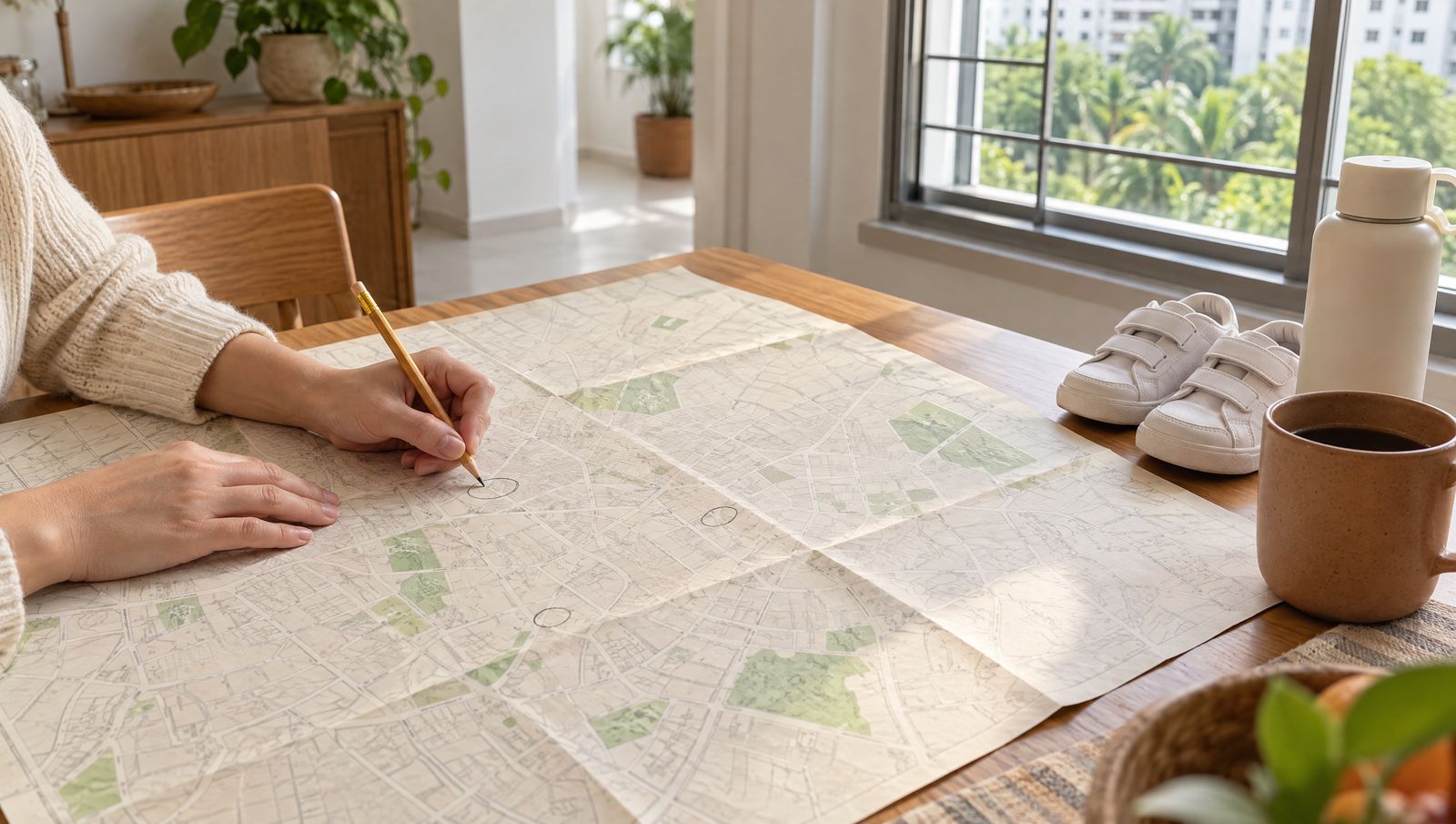
When it was our turn, we did what most parents probably do. We went down the list and shortlisted the schools closest to home.
Convenience sounds unromantic, but you will do the drop-off and the pick-up every school day for years. Distance is a real criterion, not a lazy one.
So here is the same list by place. It uses where each school runs today, not where MOE files it. Five schools are in temporary homes, marked “for now”, and their moves are in the next section.
| Area today | Schools |
|---|---|
| Ang Mo Kio | Pathlight School (Ang Mo Kio); Pathlight School 3, for now; APSN Chaoyang School; APSN Tanglin School |
| Bedok | APSN Katong School; AWWA School @ Bedok; MINDS Towner Gardens School |
| Bukit Batok | Eden School; St. Andrew’s Mission School, for now |
| Choa Chu Kang | APSN Delta Senior School |
| Hougang | AWWA School @ Napiri |
| Jalan Eunos | Maitri School, for now |
| Jurong | Cerebral Palsy Alliance Singapore School (West) |
| Marine Parade | St. Andrew’s Autism School |
| Pasir Ris | Cerebral Palsy Alliance Singapore School (East) |
| Queenstown | MINDS Lee Kong Chian Gardens School; Rainbow Centre Margaret Drive School |
| Sembawang | Rainbow Centre Admiral Hill School |
| Sengkang | MINDS Fernvale Gardens School |
| Tampines | Pathlight School (Tampines); Metta School |
| Teck Whye Crescent | Anglo-Chinese School (Academy), for now |
| Toa Payoh | Lighthouse School |
| West Coast Road | Grace Orchard School, for now |
| Woodlands | MINDS Woodlands Gardens School |
| Yishun | Rainbow Centre Yishun Park School |
Three rows name a street: Jalan Eunos (Maitri School), Teck Whye Crescent (Anglo-Chinese School (Academy)) and West Coast Road (Grace Orchard School). MOE gives these temporary homes as street addresses, and the tables above use the same names, so check them against your own town on a map.
Distance is not only about your own car or train ride. Some schools arrange a school bus through a private operator, as Grace Orchard School does, so ask each school on your shortlist how pupils from your area get there.
What changed in 2026, and what moves next
Four changes since 2025 are easy to miss, and one of them is still rolling out in 2027.
- A new national-curriculum school. MOE gave the first quarter of 2026 as the opening of Anglo-Chinese School (Academy).
- A new autism programme at APSN Chaoyang School. Its Chaozheng Programme started in July 2026, and MOE now lists it for autism with intellectual impairment.
- One school stopped taking a group. From 2026, AWWA School @ Napiri no longer enrols students with multiple disabilities.
- Extra MINDS campuses. From the second half of 2026, MINDS Fernvale Gardens School runs an extra campus from an interim site in the east, and MINDS Lee Kong Chian Gardens School one in the central region. From 2027, MINDS Towner Gardens School adds one in the east, and MINDS Woodlands Gardens School moves to a larger interim site in the north. MOE says these sites will be used for at least five years, so ask a MINDS school which campus your child would attend.
Five schools are also waiting to move into permanent campuses. If your child will be at one of them for years, the school run you plan for now may not be the one you end up doing.
| When | Planned move |
|---|---|
| 2028 | Maitri School: Jalan Eunos to Pasir Ris (projected) |
| 2029 | Grace Orchard School: West Coast Road to Jurong West (projected) |
| Jan 2031 | Anglo-Chinese School (Academy): Teck Whye Crescent to Tengah |
| 2031 | St. Andrew's Mission School: Bukit Batok to Clementi (projected) |
| 2032 | Pathlight School 3: Ang Mo Kio to Punggol (projected) |
More places are coming too. In March 2026, MOE said SPED schools would be able to serve about 12,000 students by the early 2030s, up from 9,000 then. MOE is also studying three new schools for autistic children with an intellectual disability, to be set up with APSN, the Autism Association (Singapore) and St. Andrew’s Mission Hospital, and has said it will share details when they are ready.
How to choose: what we would tell the next parent
Start with distance, honestly. Shortlist what you can reach, then compare.
Go to the open houses. Some SPED schools hold them, and they are worth moving your calendar for. You see the real campus, not the website photos.
It also works both ways: it is the school’s chance to meet you and see whether your child fits the incoming group. In our daughter’s case, the school placed her in an intake where the new students shared similar behavioural profiles, ones the teacher could manage together. That is the kind of care you never learn about from a brochure.
Do not judge a school by its website. Some SPED schools keep theirs up to date, but others have not touched theirs in years, so the information can be stale and the photos may not match the campus today. Visit in person whenever you can, because your child may spend many years there.
Ask about life beyond the classroom. Some schools run sports and enrichment actively.
MOE notes that SPED schools may have facilities to support specific learning needs, such as “sensory integration rooms” and “hydrotherapy pools”. In our experience, a few even have swimming pools with instructors trained to work with children with special needs. If your child lights up in the water or on a field, ask.
If you are not Singapore Citizens, plan for a wait. We are Permanent Residents, and we were placed on a waitlist: that is our experience, not a published rule. But if your family is not Singaporean, build waiting time into your plans and ask each school directly where you stand.
If you cannot get to an open house yet, MOE has made its own film introducing SPED schools.
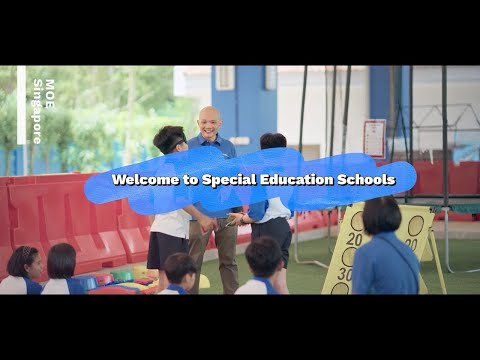
Watch on YouTube: Welcome to Special Education schools, by MOE Singapore.
It comes from the ministry that funds every school on this list, so it is a fair first look before you book your visits.
Fees, and where help comes from
SPED schools set their own fees. Schools that publish a fee charge Singapore Citizens between S$20 and S$90 a month, as of August 2026. Permanent Residents pay several times more at most schools.
In August 2026, eleven of the 26 published no fee on their own school pages, so for those you will need to phone. Every figure, school by school, is in SPED school fees in Singapore: what each school charges.
For lower-income Singapore Citizen families, the Special Education Financial Assistance Scheme (SPED FAS) is MOE’s help with school costs. It covers all of the miscellaneous fees, the non-tuition part of the monthly bill, and at secondary level the school fee too.
It also gives free textbooks and school attire, meal subsidies and a public transport subsidy. Our SPED FAS entry explains who qualifies.
From our own experience as a Permanent Resident family: speak to the school directly and ask what financial help might be possible. The worst they can say is no, and schools have heard the question before.
How to apply, and how long it takes
You apply to MOE, not to the school gate, through one online form. MOE advises starting at least a year before your child’s admission, because the reports take time to gather. The full walk-through, with our own application story, is in how SPED school placement works, and the short version is below.
- Book a professional assessment, ideally 6 months before the school’s application deadline. Its report goes into your application, with a medical report.
- Check each school’s deadline on MOE’s admissions timelines page. Deadlines differ by school.
- Fill in MOE’s online form, listing up to 3 schools that can support your child’s primary diagnosed condition.
- Wait for the outcome. A successful application brings an offer letter by post or email within 3 to 6 months.
- Register your child at the school within 2 weeks of receiving the offer letter.
If your first-choice school has no vacancy, or cannot cater to your child’s needs, an alternative school will be recommended. MOE says it may not be your second or third choice, because the recommendation follows your child’s learning needs.
Plan for the wait to feel long. For children starting Primary 1 at a SPED school in 2025, MOE put the average time from application to a confirmed place at six months, and longer where an alternative school had to be found.
International families do not use MOE’s form. MOE asks them to approach the SPED schools directly about admission and vacancies.
Common questions
How many SPED schools are there in Singapore?
There are 26 government-funded SPED schools, as of October 2026. Social service agencies run them and MOE funds them. MOE’s list of SPED schools, sorted by condition, names 26 different schools: the ones above.
Which SPED schools are for autism?
Twenty-three of the 26. Five teach the national curriculum to autistic children without an intellectual disability: the three Pathlight schools, St. Andrew’s Mission School and Anglo-Chinese School (Academy), and eighteen take autistic children who also have an intellectual disability. Only the two Cerebral Palsy Alliance Singapore schools and Lighthouse School sit outside MOE’s autism lists.
Are SPED schools free?
No, but fees for Singapore Citizens are low at the schools that publish them: S$20 to S$90 a month, as of August 2026. For lower-income citizen families, SPED FAS covers the miscellaneous fees, the school fee too at secondary level, plus textbooks, attire, meals and transport help.
Can Permanent Residents and foreigners apply?
MOE’s online form is for Singapore Citizen and Permanent Resident children joining a school at its first level. Our own PR application ended on a waitlist, so plan buffer time. International families approach the schools directly, and Permanent Residents pay several times more than citizens at most schools.
Does a SPED school mean giving up the national curriculum?
Not at the five national-curriculum autism schools in the first group. MOE describes the curriculum at SPED schools as customised to each child, aimed at living, learning and working outcomes, and its list marks only those five as offering the national curriculum. That is a different route for different needs.
Your next step
Pick the group your child’s report points to, then shortlist two or three schools you can reach from home. Look up each one’s application deadline on MOE’s SPED admissions timelines page, and ask each school about an open house before that date.
If you would like the next steps in your inbox as they come, our newsletter is below. We write when there is something useful for Singapore autism parents.