Autism Association (Singapore): what it runs, by age, and how to get in
Autism Association (Singapore)
The Autism Association (Singapore) is a charity that a group of parents set up in 1992 for their autistic children. It often goes by the short form AA(S).
Today it runs four services under one name, Eden. The one that fits depends on your child’s age.
Eden Children’s Centre gives early intervention to children who are 2 to 5 when they start. Early intervention means therapy and teaching in the years before primary school.
Eden School is a government-funded school for ages 7 to 18. It is one of Singapore’s special education (SPED) schools.
Eden Centre for Adults is a weekday centre for autistic adults from 18. Eden Friendship Club runs Saturday activities for adults.
Each service has its own way in. For the two centres, you apply through SG Enable, Singapore’s first-stop agency for disability. One parent must also be a member of the Autism Association (Singapore), at S$20 a year.
For Eden School, you apply to the Ministry of Education (MOE).
The Autism Association (Singapore) is not the Autism Resource Centre (ARC). They are two separate autism charities with similar names. A section near the end shows how they differ.
What the Autism Association (Singapore) is
It began with parents. A group of parents formed it on 29 August 1992. In its own words, they were “concerned about inadequate provision in Singapore” for their autistic children.
It has been a registered charity since 28 January 1995.
It is one of Singapore’s social service agencies. These are the community groups that run services such as SPED schools and day centres.
Its mission is “to develop and provide a range of quality services for persons on the autism spectrum in Singapore across lifespans”. Its four services do run from age 2 into adulthood.
Early intervention runs in Clementi, Eden School in Bukit Batok, and the adult centres in Clementi and Hougang. The head office shares Eden School’s address at 101 Bukit Batok West Avenue 3.
The office line is 6774 6649 on weekdays. The official website is autismlinks.org.sg.
One thing it does not do is diagnose autism. It gives therapy, but “not psychological assessments and diagnoses”.
For a diagnosis, it points parents to a private psychologist or to a government hospital. Two such hospitals are KK Women’s and Children’s Hospital (KKH) and the National University Hospital (NUH). Our guide to getting an autism diagnosis in Singapore covers that step.
Which Eden service fits your child’s age
Find your child’s age in the second column. The fourth column shows where you start.
| Service | Age | What it is | The first step | Cost |
|---|---|---|---|---|
| Eden Children’s Centre (Clementi) | 2 to 5 in the year your child starts | Early intervention, with a learning plan for each child | A referral through SG Enable, and one parent becomes a member | Set by household income: S$5 to S$430 a month for citizens, as of August 2026 |
| Eden School (Bukit Batok, two campuses) | 7 to 18 | A SPED school for autistic children who also have an intellectual disability, a condition that affects how a child learns and copes with everyday tasks | MOE’s online SPED school form | S$85 a month for citizens, S$350 for Permanent Residents |
| Eden Centre for Adults (Clementi and Hougang) | 18 and above in the year of entry | A weekday day centre (a Day Activity Centre) for daily living, fitness, work and leisure skills | An application through SG Enable, and one parent becomes a member | Set by household income before entry; no figure published |
| Eden Friendship Club | 18 and above | Saturday exercise and social games at Eden School, with outings every few weeks | Email the club from its page | No fee published |
The two centres and the school each have more rules than fit in a table. The sections below give them in full.
Eden Children’s Centre: early intervention from age 2
Eden Children’s Centre was once called the Autism Children’s Centre. Each child there gets an Individualised Education Programme (IEP).
An IEP is a written plan of goals, built from an assessment of what your child needs. Teachers review it with you every semester.
The plan covers language and communication, play and social skills, and movement. It also covers managing their own behaviour and feelings (self-regulation), and the early skills a child uses at school.
Sessions mix one-to-one teaching with small and big groups. The centre’s speech therapists and occupational therapists support them.
Sessions run either twice a week for three hours or three times a week for two hours. The centre follows MOE’s school holidays.
Plan for your own time too. For the first six months, a parent or caregiver is expected to sit in. You also arrange the trip to and from the centre yourself.
Who can join
- Your child has an autism diagnosis, or suspected autism.
- Your child is 2 to 5 years old in the year they start.
- At least one parent is a registered member of the Autism Association (Singapore).
- Both parents and the child are Singapore Citizens or Permanent Residents. A Permanent Resident family needs a parent or a sibling who is a citizen.
- Your child is not already in another intervention programme funded by the National Council of Social Service (NCSS) or the Ministry of Social and Family Development (MSF).
You may also see the ages 2 to 6 or 2 to 7 given for this centre. For entry, what counts is your child’s age in the year they start: 2 to 5.
How to get a place
- Get a medical screening at a hospital or with a psychologist. It must show autism or suspected autism. The full diagnosis does not have to be finished.
- An application goes to SG Enable. It contacts you and refers your child to the centre you choose. If your child was diagnosed at KKH or NUH, the hospital sends the case to SG Enable for you.
- A social worker from the centre meets you. They tell you the likely wait and the fee.
- When a place opens, the centre checks what your child needs (a needs assessment). Then your child starts.
A brother or sister of a child already at an Eden service gets priority, though not a guaranteed place. The wait changes through the year, and the centre can give only a rough estimate. It is fair to phone and ask where you stand.
What it costs
The centre’s fees follow SG Enable’s fee table for EIPIC, the Early Intervention Programme for Infants and Children. As of August 2026, Singapore Citizens pay S$5 to S$430 a month. Permanent Residents pay S$20 to S$1,270.
Fees depend on your household’s income per person. To work it out, take your household’s yearly income, divide it by 12, then divide by the number of family members registered at your address. Count grandparents or other relatives there, but not a domestic helper.
| Monthly household income per person | Monthly fee at Eden Children's Centre, Singapore Citizens |
|---|---|
| Up to S$1,000 | S$5 |
| S$1,001 to S$1,400 | S$50 |
| S$1,401 to S$1,800 | S$80 |
| S$1,801 to S$2,300 | S$130 |
| S$2,301 to S$2,800 | S$210 |
| S$2,801 to S$3,500 | S$270 |
| S$3,501 to S$4,600 | S$330 |
| Above S$4,600 | S$430 |
For citizens, Baby Bonus money can go toward the fee. If you still need help, you can apply to the Autism Association (Singapore) for its own subsidy. Applications are treated in confidence.
Our guide to how EIPIC works explains the national programme, and our list of EIPIC centres sets Eden beside the other operators.
Eden School: ages 7 to 18
Eden School is the school the Autism Association (Singapore) runs. It is an MOE SPED school: it is on MOE’s list of government-funded SPED schools. MOE groups it with the schools for autistic children who also have an intellectual disability.
Pupils aged 7 to 12 study at 101 Bukit Batok West Avenue 3. Students aged 13 to 18 study at Campus 2 on Bukit Batok West Avenue 2.
You apply through MOE’s online SPED school form. On it you can list up to 3 schools that support your child’s primary diagnosed condition. That is the main condition in your child’s diagnosis.
Our guide to the MOE SPED school application, step by step, walks through the form. Eden School takes applications for children aged 6 to 13 on 1 January of the year you apply. It gives priority to Junior 1, a SPED school’s entry level.
Your application needs a diagnosis report, a medical report and a psychological report. For 2027 entry, the school’s window ran from 2 February to 22 May 2026. Check the school’s dates early in the year you apply.
Citizens come first. As of August 2026, Eden School has a waiting list of Singapore Citizen children. Until further notice, it cannot consider children who are not citizens.
A Permanent Resident family should ask the school directly before listing it.
Fees are S$85 a month for citizens and S$350 for Permanent Residents, from 1 July 2025. Households that meet the school’s fee subsidy rules pay no school fee. They also get free uniforms and help with shoes, socks and meals.
For the school bus, you can apply to SG Enable’s Enabling Transport Subsidy. It helps with the monthly bus fare, and whether you qualify depends on your household’s income.
More places may come. In March 2026, MOE said it was studying three new SPED schools for autistic children with an intellectual disability.
It named the Autism Association (Singapore) as one of three partner agencies to set them up. MOE said it would share details when ready.
The news channel CNA reported the plan on the day MOE announced it, in a short clip.
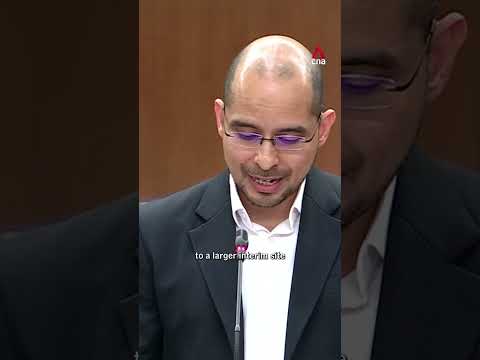
Watch on YouTube: 3 new SPED schools for students with autism and intellectual disability to open, by CNA.
It is the national news report of that same announcement. At about a minute and a half, it is a quick watch for a parent weighing Eden School now.
Our Eden School dictionary entry has more on the school itself. To compare it with every other SPED school, see our SPED schools directory.
After 18: Eden Centre for Adults and Eden Friendship Club
There are two Eden services for autistic adults. One fills the weekday, and the other is for Saturdays.
Eden Centre for Adults
Eden Centre for Adults was once the Autism Youth Centre. It is a Day Activity Centre, a place where adults with disabilities spend the day in care and skills training.
It runs from Monday to Friday at two centres, in Clementi and Hougang. It closes on public holidays and for four weeks a year.
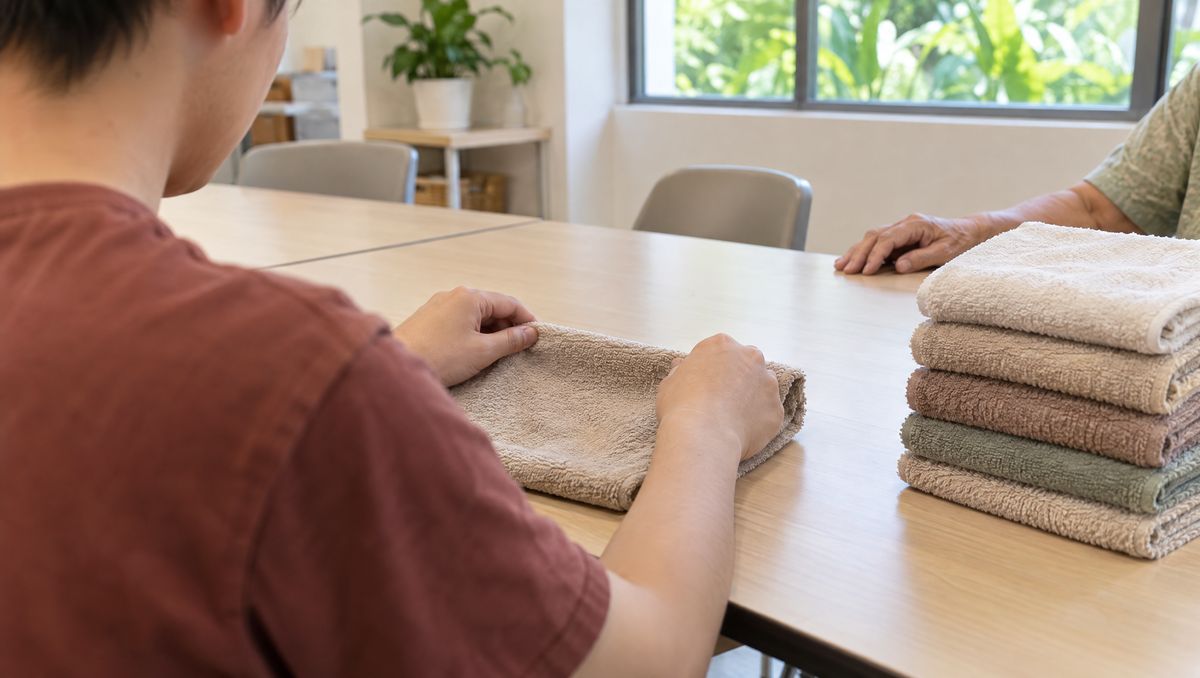
Each adult’s programme is built around their own strengths. The centre calls this approach person-centred planning. The week covers health and fitness, daily living, work skills, social skills, community living and leisure.
The entry rules are close to the children’s centre’s:
- The adult has an autism diagnosis or suspected autism.
- They are 18 or above in the year of entry.
- One parent is a member.
- The family are citizens or Permanent Residents. A Permanent Resident applicant needs a parent who is a citizen.
- The adult is not already in another programme funded by NCSS or MSF.
The adult must also meet eight further rules:
- They are in good health and free from infectious disease.
- Any medical or mental health condition, such as seizures, epilepsy or psychosis, is being treated and kept under control.
- They can control their feelings in a socially suitable way, with support.
- They have no risk behaviour toward themselves, others or property that cannot be controlled.
- They can manage basic self-care, such as eating, moving about and dressing, with support.
- They can use the toilet on their own.
- They can work on their own within a group.
- They can follow basic one-step instructions, such as stop, come, sit or give.
If one of these worries you, ask the centre before you apply.
How to get a place at the adult centre
- Apply through SG Enable. A case worker there goes through the forms and reports with you. These include the medical and diagnosis reports, and any psychological or school reports you have.
- SG Enable sends the application to the centre you choose.
- Places are competitive, so the centre contacts you when one comes up. It then invites you to a needs assessment and tells you the fee.
- After an offer, your young adult has a two-week trial. Then comes a six-month probation, a settling-in period, before the place is confirmed.
The adult centre publishes no fee figure. A social worker works out the fee before entry, from your household’s income per person. Families who need help can apply for the same subsidy as at the children’s centre.
Transport is not provided, but the centre can put you in touch with private bus operators in your area.
For the wider picture, read our guide to autism after 18 in Singapore and our map of adult disability services in Singapore.
Eden Friendship Club
Eden Friendship Club is for adults who want company and activity. It started in October 2015 as Eden Activity Club and took its present name in March 2024.
Members meet every Saturday at Eden School for exercise and social games in small groups. There are outings every few weeks.
It takes adults with an autism diagnosis or suspected autism, aged 18 or above in the year they join. Its published entry rules include no parent-membership rule. You can email the club about joining from its page.
Support for you, the caregiver
The Autism Association (Singapore) also supports the people doing the caring. Its Caregiver Support Network began in November 2015 for families at the two adult centres. It is a place to meet, share and form groups where families help each other.
Caregivers can also get counselling, a support group and activities, on 6774 6649.
Our guide to autism support groups and caregiver networks in Singapore has other parent groups if you want more than one.
Does a parent need to be a member?
For the two centres, yes. Eden School’s admission criteria include no membership rule.
At the two centres, at least one parent must be a registered member of the Autism Association (Singapore). This applies before a child joins Eden Children’s Centre, or before an adult joins Eden Centre for Adults.
Membership is open to anyone aged 21 or above who supports its aims. It costs S$20 a year, or S$200 once for life.
Download the form from its membership page. Post it with a cheque to the head office. Processing takes about 10 working days.
Members can vote at its annual general meeting and get its news and updates. If you want to know why the centres ask for a member parent, ask when you apply.
Autism Association (Singapore) vs Autism Resource Centre: how they differ
The names sound alike, and both charities serve autistic people from childhood into adulthood. But they are separate organisations, with separate services and separate websites.
| Stage | Autism Association (Singapore) | Autism Resource Centre (Singapore) |
|---|---|---|
| Early intervention | Eden Children’s Centre, in Clementi | WeCAN Early Intervention Programme |
| School | Eden School: autism with an intellectual disability | Pathlight School: autism with no intellectual impairment, on the national curriculum |
| Adults | Eden Centre for Adults (a day centre) and Eden Friendship Club | The Employability and Employment Centre, for work, among other services |
| Website | autismlinks.org.sg | autism.org.sg |
The difference that matters most is the school. On MOE’s form, you can only list schools that support your child’s primary diagnosed condition. So your child’s report, not the charity’s name, points you to Eden School or to Pathlight School.
If it points to Pathlight, our Pathlight School admissions guide covers how it takes pupils.
For early intervention, the two sit closer together. As of August 2026, Eden Children’s Centre and ARC’s WeCAN charge citizens the same fee at every income level.
For ARC itself, our guide to the Autism Resource Centre’s services and admissions sets out what it runs and how to get in. For a short definition, see our Autism Resource Centre dictionary entry.
Common questions
How much do the Eden services cost, and what help is there?
Eden Children’s Centre charges by household income: S$5 to S$430 a month for citizens, as of August 2026. Citizens can use Baby Bonus money toward it.
Eden School costs S$85 a month for citizens, and households that meet its fee subsidy rules pay no school fee.
The adult centre publishes no fee figure. It sets your fee before entry, from household income. At both centres, you can also apply to the Autism Association (Singapore) for its own subsidy.
Can Permanent Resident families use the Eden services?
At the two centres, yes, if someone in the family is a citizen. Eden Children’s Centre needs a parent or a sibling who is a citizen. Eden Centre for Adults needs a parent who is one.
Eden School is different. As of August 2026, it is not considering children who are not citizens, because of its waiting list. Its fee for Permanent Residents is S$350 a month.
Is there a waiting list?
Plan for one at the two centres and at the school. At Eden Children’s Centre, the wait changes through the year. At the adult centre, places are competitive.
Eden School has a waiting list of citizen children. Ask for an estimate when you apply, and keep other options open while you wait.
Is transport provided?
Not to the two centres. At Eden Children’s Centre, you bring your child yourself. The adult centre can connect you with a private bus operator.
For Eden School’s bus, SG Enable’s Enabling Transport Subsidy can help with the monthly fare if your household qualifies.
How do I contact the Autism Association (Singapore)?
The head office is at 101 Bukit Batok West Avenue 3, #01-01, and its line is 6774 6649, from 9am to 4.30pm on weekdays. Eden School has its own line, 6265 7400.
Your next step
Find your child’s age in the table near the top, and take that row’s first step:
- Aged 2 to 5: start the referral through SG Enable, and name Eden Children’s Centre as your choice. Have one parent become a member at the same time.
- Starting school: read our SPED schools directory. Then list Eden School on MOE’s form if your child’s report points there.
- 18 and over: start the SG Enable application and the parent membership at the same time.
If you would like the next steps in your inbox as they come, our newsletter is below. We write when there is something useful for Singapore autism parents.
Official source: https://www.autismlinks.org.sg/