
Dictionary: MOE · SPED · DS-LS · SEN Officer · ECDA
What inclusive education means in Singapore
Inclusive education is the idea that children with special needs learn in ordinary schools beside other children, with the support they need. In Singapore, inclusive education happens mainly in the mainstream school. The SPED school is the second road, for children whose needs are moderate to severe.
MOE explains how inclusive education works in mainstream schools in its own words. In March 2026 it told Parliament: “In mainstream schools, we adopt a tiered approach”. Tiered means in layers.
The first layer is every teacher, with a baseline understanding of “inclusive classroom practices so that students with SEN can learn alongside their peers”. On top of that, Teachers Trained in Special Needs and SEN Officers give deeper support.
So inclusive education here is not one programme you sign up for. It is a set of people in your child’s school, with more help stacked on for a child who needs more.
| Where they learn | Students with special educational needs (SEN) |
|---|---|
| Mainstream schools | 30,000 |
| SPED schools | 8,500 |
How many students with special needs are in mainstream schools today? In a reply to Parliament on 10 September 2026, MOE said around 7% of students in its mainstream schools have SEN, and “All schools have students with SEN and can support them.”
MOE also split the 2025 share by type of school. It was 8% in Government and Government-aided schools, 4% in Special Assistance Plan schools, which are steeped in Chinese language and culture, and 3% in Integrated Programme schools, where a six-year course leads to the A-Levels with no O-Levels on the way.
In plain words: about 7 in every 100 mainstream students have SEN, in every kind of school. Your child would not be the only one, and the school already supports others like them.
Your child’s support at each stage
This table puts the stages side by side. Each row names the support, who gives it and how a child gets it. The sections below take one stage each, and the last column points to our longer guide for that stage.
| Stage | The support | Who gives it | How your child gets it | More detail |
|---|---|---|---|---|
| Preschool, K1 and K2 (the two kindergarten years before Primary 1) | DS-LS, for children who need low levels of early intervention, the extra teaching and therapy help for young children | Early intervention professionals and therapists, inside the preschool | A preschool that offers DS-LS assesses whether your child is eligible | What DS-LS is, in our dictionary |
| Preschool, age 2 to 6 | DS-Plus, for children who need low levels of early intervention | Early intervention professionals and therapists, beside the preschool teachers | No application: a paediatrician or an early intervention professional refers your child | Our DS-Plus guide: who qualifies, cost and referral |
| Starting Primary 1 in a mainstream school | Checks on language, reading and number skills; learning support programmes; TRANSIT (TRANsition Support for InTegration), taught in smaller classes | Primary 1 teachers, with SEN Officers watching for social and adjustment needs | The school checks and observes in Primary 1, and places your child by need | The Primary 1 section below |
| Mainstream primary and secondary school | The SEN Officer, Teachers Trained in Special Needs, and MOE Educational Psychologists, who assess how a child learns, when needed | The school’s own staff; MOE’s psychologists by referral | By your child’s learning needs, even without a formal diagnosis | Our guide to autism support in a mainstream school |
| Any school age, for mental health | REACH, a community mental health team | REACH teams working with the school | The school refers your child | The REACH section below |
| SPED school, from the first year (Primary 1, or Junior 1 in some SPED schools) | A customised curriculum, a written plan for your child called an Individual Education Plan, and therapy on site | SPED school teachers and therapists | You apply online to up to 3 SPED schools | Our list of SPED schools, by need and area |
The moves between these rows have their own section further down, with who decides each one.
Preschool: DS-LS and DS-Plus
Inclusive education starts before school. In a Singapore preschool, an autistic child with milder needs can get support inside the preschool they already attend, through one of two programmes listed by the Early Childhood Development Agency (ECDA), the government agency for early childhood.
Both give early intervention, or EI: teaching and therapy support for young children whose development needs a hand.
DS-LS, Development Support-Learning Support, is for children in K1 and K2 who need low levels of EI support. Preschools that offer it assess whether your child is eligible. If your child’s preschool does not offer DS-LS, ECDA says you may ask the preschool to contact its therapy team.
DS-Plus, Development Support-Plus, is also for children who need low levels of EI support, and it is given in the preschool setting. EI professionals and allied health professionals, the therapists, work beside the preschool teachers.
ECDA’s page says: “There is no need to apply for DS-Plus.” A paediatrician or an EI professional refers your child.
SG Enable, the government agency for disability, puts DS-Plus at about 2 to 4 hours a week on average, in its guide last updated on 1 September 2025.
In both programmes the professionals write goals for your child, called an Individualised Educational Plan, or IEP. A child is in one or the other, never both: each programme’s admission rules say your child cannot be in another EI programme funded by the Ministry of Social and Family Development (MSF) at the same time.
For a child who needs more, ECDA lists a third programme: EIPIC, the Early Intervention Programme for Infants and Children, for children who need medium to high levels of EI support. Our comparison of EIPIC, DS-Plus and DS-LS sets the three side by side.
Starting Primary 1: what the new school hears
The question at this hand-over is a simple one: will the new school know my child, or do we start from zero?
MOE answered part of that in Parliament on 3 February 2026. Before a child starts school, with the parent’s consent, information about the child’s developmental needs or SEN is shared with the receiving primary school “via hospitals and Early Intervention Programme for Infants and Children (EIPIC) centres”.
Parents can also tell the school themselves, through the school’s own data collection form. MOE says this lets the school plan class placement and transition support before day one.
Read the two routes MOE names closely. The reply names hospitals and EIPIC centres. It does not name DS-LS or DS-Plus, which run inside the preschool.
So if your child’s support has been inside the preschool only, the school form is the route you control. Use it.

Once school starts, Primary 1 teachers screen every child for language, literacy and numeracy, which means reading, writing and number skills. SEN Officers work with the Primary 1 teachers “to observe and identify children with social-behavioural difficulties and adjustment issues”.
A child who needs it then gets a learning support programme for literacy and numeracy, or TRANSIT, short for TRANsition Support for InTegration. TRANSIT is extra help to settle into school, which MOE runs in smaller classes.
MOE said in March 2025 that TRANSIT was in 98% of primary schools as of January 2025, and that it would reach all primary schools by 2026.
Mainstream primary and secondary school: the layers of help
In a mainstream primary or secondary school, an autistic child gets the same layers of help as any student with SEN: every teacher, Teachers Trained in Special Needs, the SEN Officer and, when needed, an MOE psychologist. MOE names mild autism among the needs its SEN Officers support.
MOE says it supports students in mainstream schools based on their learning needs, “even when they do not have a formal SEN diagnosis”. So support does not wait for a report. It starts with what the teachers see.
Here are the layers, from the whole class to your child alone. They are the same in primary and secondary school.
- Every teacher. All teachers in mainstream schools are trained in basic support strategies, MOE said in July 2026.
- Teachers Trained in Special Needs. Every school has some. In March 2025 MOE put it at around eight in every primary and secondary school. They share what works with the other teachers.
- The SEN Officer. A staff member whose job is students with SEN. The next section is about this role.
- MOE Educational Psychologists. These psychologists assess how a child learns. If a child still struggles after the school’s own help, the school can refer them, with your consent, to one of MOE’s psychologists for an assessment. MOE says these take two months on average, longer for complex cases, and your child keeps getting support from SEN Officers while it runs.
The move to secondary school has its own hand-over. MOE says primary schools share transition information with the receiving secondary school. The secondary school uses it to plan help, class placement and assistive technology, the devices and software that help a child learn.
In secondary school, MOE’s psychologists work with the SEN Officers too.
The SEN Officer: the person you will meet
The Special Educational Needs Officer, or SEN Officer, is the member of school staff whose whole job is students with SEN. In MOE’s words, the role is “to support students with special educational needs by providing targeted interventions and by raising the capability of educators teaching these students”. In plain words, the SEN Officer helps your child directly and helps the teachers teach your child.
MOE’s careers page lists mild autism spectrum disorders among the needs a SEN Officer supports, beside dyslexia, a difficulty with reading and spelling, and attention deficit hyperactivity disorder (ADHD).
Every primary and secondary school has SEN Officers, MOE said in March 2025, and they work with teachers, school counsellors and parents. In March 2026 MOE added that every primary school has at least two, and a school with higher and more complex needs may have up to four.
There are more of them than there used to be. MOE counted around 450 SEN Officers in mainstream schools in 2017 and around 820 as at December 2025, close to twice as many.
A SEN Officer answers to a Reporting Officer in the school, usually a key staff member or a school leader. More experienced Lead and Master SEN Officers coach them.
Our dictionary has a short entry on the SEN Officer title. Our guide to autism support in a mainstream school covers how a SEN Officer works with a child, in class and in small groups, and what to ask the school.
REACH and the school counsellor
Some children need help with their mental health as well as their learning. For that, the school can bring in REACH, short for Response, Early Intervention and Assessment in Community Mental Health. The Ministry of Health told Parliament in 2023 that REACH teams work closely with schools, including madrasahs, the Islamic religious schools, “to provide interventions for students with mental health needs”.
The referral comes from the school. MOE told Parliament in July 2026 that schools refer students who need mental health services to REACH, and that REACH received an average of 1,300 referrals a year from MOE schools over the past five years. That is about 3 in every 1,000 students at primary and at secondary level.
REACH also sits behind the psychologists. MOE says its Educational Psychologists may ask REACH’s medical professionals for input when they assess a child.
If you are worried about your child’s mood or anxiety at school, ask the SEN Officer or the school counsellor whether a REACH referral is worth discussing. The counsellor works with the SEN Officer already.
The same mainstream school guide has a longer section on REACH and what it is not.
SPED schools: the other road
A SPED school is not the opposite of inclusive education. It is the road for a child whose needs are moderate to severe, and MOE describes what it gives in plain terms.
All government-funded SPED schools provide “intensive, specialised support and curriculum customisation”. That means a curriculum shaped around your child, with therapy in the school from speech and language therapists, occupational therapists, physiotherapists, psychologists and social workers.
The school writes an Individual Education Plan, a written plan of goals for your child, with you and updates it regularly. In the secondary years it adds an Individual Transition Plan for life after school.
SPED students also meet mainstream peers. MOE’s page names joint recesses, co-curricular activities (the school clubs and teams) and excursions with mainstream schools.
Places are growing. MOE said in March 2026 that demand for SPED schools has risen, driven by more students diagnosed with autism with intellectual disability. It plans to go from 26 SPED schools to 30 by the 2030s, counting three new schools and Pathlight School 3, a third Pathlight School.
MOE also plans to go from about 9,000 SPED students to about 12,000 in the early 2030s, about a third more places. Our list of SPED schools in Singapore shows who each school takes and where it is.
CNA’s news report from the day of that announcement covers the new SPED schools.
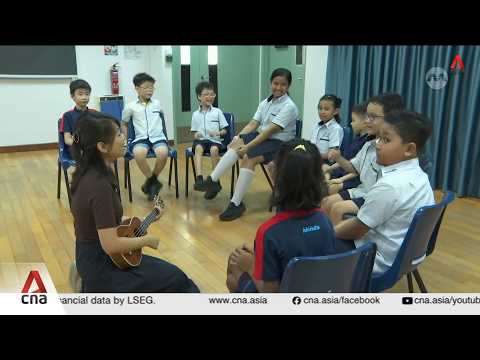
Watch on YouTube: Singapore to open three more special education schools by early 2030s, by CNA.
We chose it because it shows the SPED expansion as it was announced, if you would rather watch than read the figures above.
Moving between mainstream and SPED: who decides
Can a child move from a SPED school to a mainstream school, or the other way? Yes, in both directions. A first choice is not a final one.
This page covers four moves, and each has a different person or office making the call.
| The move | How it starts | Who decides |
|---|---|---|
| Preschool to a SPED school at Primary 1 | You apply online, listing up to 3 SPED schools, by your first-choice school’s deadline | Your first-choice SPED school, which may meet you and your child “to assess if your child’s needs can be supported” |
| Mainstream school to a SPED school, midway | You approach your child’s current school to make a transfer application | The transfer goes through the current school; ask it who reviews the application |
| SPED school to mainstream secondary, after the PSLE | Your child passes the Primary School Leaving Examination (PSLE), the national exam at the end of Primary 6 | MOE’s reply ties this move to passing the PSLE and names no other step |
| SPED school to a mainstream school, midway | Your child is assessed as suitable for a mainstream school | The panel that makes that assessment; the question MOE answered in Parliament named it the Multi-Agency Advisory Panel (MAAP), a panel drawn from more than one agency |
Into a SPED school for Primary 1. MOE asks you to start preparing at least a year before your child starts, because the reports take time. You will need a professional assessment report, a medical report, and a report from your child’s preschool or EIPIC teachers.
If the school offers a place, MOE says the letter comes within 3 to 6 months of your application. Our step-by-step guide to the MOE SPED application has the full list.
Out of a SPED school. MOE told Parliament in January 2024 that, in the past three years, about 18% of students with autism from SPED schools, nearly 1 in 5, went on to mainstream secondary schools after passing the PSLE. From 2021 to 2023, 18 SPED students with autism moved midway to mainstream schools “after being assessed to be suitable”.
Those numbers tell you the door opens both ways. They do not tell you what your child will do. Each move rests on your own child’s needs, and our guide to choosing between mainstream and SPED covers what to weigh before the first choice.
Questions parents ask
Is Singapore’s school system inclusive for autistic children?
For an autistic child with milder needs, yes. MOE’s careers page names “mild autism spectrum disorders” among the needs its SEN Officers support, and every primary and secondary school has them. Most students with SEN learn in mainstream schools: about 30,000, or 4 in 5, as of March 2025.
For children whose needs are moderate to severe, SPED schools are the road MOE describes, and MOE is adding places there. So the answer depends on your child’s needs, and both roads are part of the same system.
Does my child need a diagnosis to get help in a mainstream school?
Not to start. MOE says it supports students in mainstream schools based on their learning needs, “even when they do not have a formal SEN diagnosis”. A diagnosis or a report still helps the school plan, which is why the school form before Primary 1 matters.
Can my child have DS-LS and DS-Plus at the same time?
No. Each programme’s admission rules exclude a child who is already in another MSF-funded early intervention programme, and each names the other as the example.
What happens after secondary school?
MOE told Parliament in January 2024 that from 2019 to 2021, more than 83% of students with SEN graduated from mainstream secondary schools, more than 4 in 5, and went on to post-secondary education, the study that comes after secondary school. That includes the polytechnics and the Institute of Technical Education (ITE).
Apart from the junior colleges and Millennia Institute, which get SEN Officers when needed, MOE says each post-secondary school has three to four SEN Officers on average. For students moving from SPED schools to ITE and the polytechnics, MOE said on 2 October 2026 that it will bring in a transition support programme, from 2027 onwards.
Before the next stage
The one step to take now is a meeting. Ask your child’s current preschool or school for a meeting about the next stage, and bring your child’s latest assessment report.
- Ask the preschool or school for a meeting about the next stage. For a K2 child, that is the move to Primary 1.
- Bring the latest assessment report, and any report from your child’s EI professionals.
- Ask what support your child gets now, and what the staff think your child will need next.
- If your child is going to a mainstream primary school, write their needs on the new school’s data collection form.
- If a SPED school is on the table, start the application work at least a year before your child starts.
You do not need to have decided anything before that meeting. Its job is to tell you what to ask next.