
Dictionary: KKH DCD · NUH CDU · EIPIC · ECDA · SG Enable
What an occupational therapist works on with an autistic child
The word “occupation” here means the things a person does with their day. For a child of four, that is playing, eating, getting dressed, using the toilet and sitting through a preschool morning. KKH puts the aim plainly: its occupational therapists help children “participate and meaningfully engage in their daily activities at home, school and in the community”.
KKH’s child development department lists what its occupational therapists assess and work on. Grouped for a parent, it comes to five areas.
Sensory processing
Sensory processing is how the brain takes in and sorts what the body senses. KKH lists eight kinds of sensory information: sight, hearing, smell, taste and touch, plus movement and balance (vestibular), body position (proprioception) and signals from inside the body, such as a full bladder (interoception).
KKH’s own examples are everyday ones. A child who finds clothing tags or certain fabrics hard to bear. A child who dislikes toothbrushing, hair washing or nail cutting, or who walks on tiptoe to avoid grass or sand. An occupational therapist looks at what is happening for your child in those moments and plans with you how the task, the tools or the room can change.
For the home side of sensory processing, our guide to reading your child’s sensory signals and calming the home sets out what to try, and our page on sensory toys for an autistic child covers the toys families ask about.
Self-care
KKH names six self-care activities: “dressing, showering, feeding, brushing teeth, toileting and sleep participation”. Singapore’s law names toileting directly too. The legal description of OT includes “management of toileting and personal hygiene”.
For toileting, our plan for toilet training an autistic child sets out the steps at home and the sensory side of it, including interoception, the body signal that says the bladder is full.
Hands and body: fine motor skills and coordination
Fine motor skills are the small, exact movements of the hands, such as a pincer grip (picking up a small thing between thumb and finger), using scissors or stacking blocks.
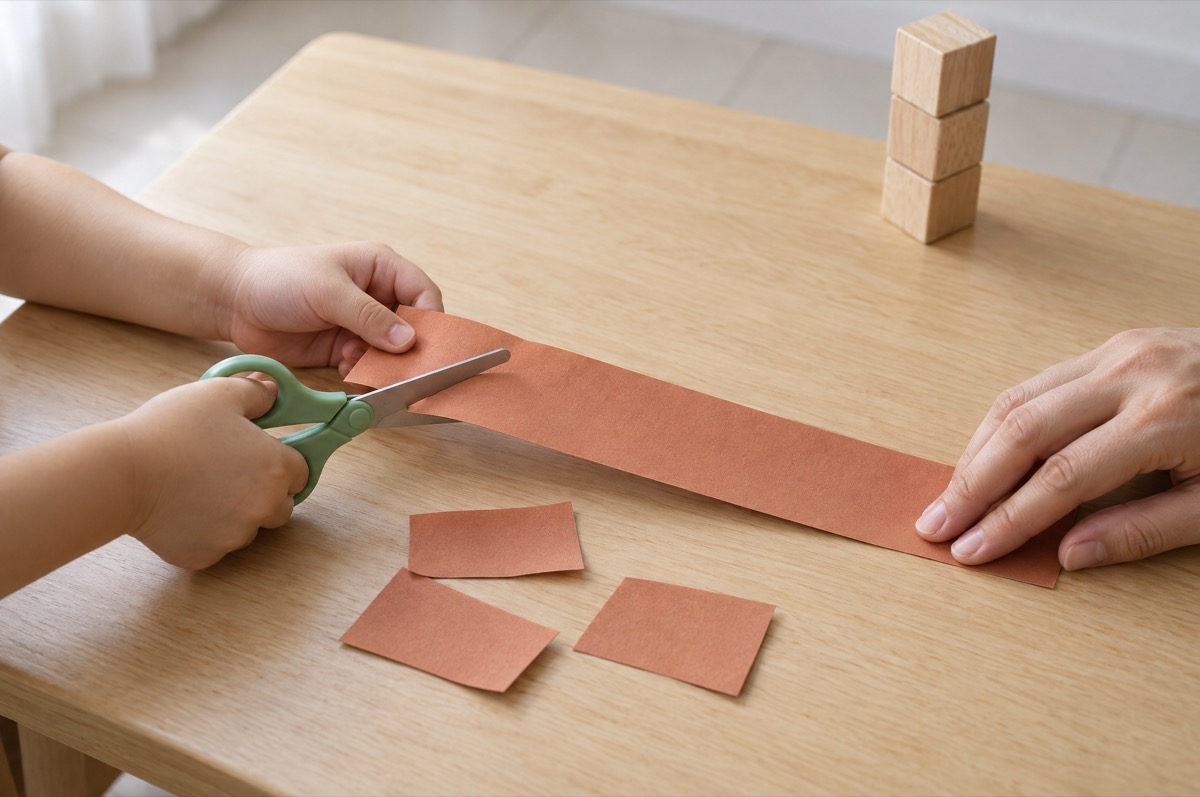
Motor coordination is the bigger picture: using both sides of the body together, judging how much force to use, and planning a movement before making it. KKH ties both to play, learning and daily living.
Attention and self-regulation
Self-regulation is a child’s ability to manage their own state for the place they are in. KKH’s example is a good one: the high alertness that suits a playground does not suit a library. An occupational therapist works on how a child moves between those states during the day.
Play
KKH calls play “every child’s occupation”. During play, KKH says, children build other skills too, including language, social skills and motor skills. So a session that looks like play can still be OT.
You are part of the session
Caregiver training means teaching the parent or carer, not only the child. KKH calls it “the heart of our service”. Its therapists invite the parent to join the child in play or a structured activity during the session, then share ways to carry the work into the daily routine. At KKH, then, expect to be in the room, not in the waiting area.
OT or speech therapy: where one stops and the other starts
The two can sit side by side on a child’s plan, and both are registered professions under Singapore’s Allied Health Professions Act. That is the law that registers therapists such as occupational therapists, physiotherapists and speech-language therapists. The Allied Health Professions Council (AHPC) is the body that keeps those registers. The Act’s own descriptions of each profession draw the line between OT and speech therapy (ST).
| Occupational therapy (OT) | Speech-and-language therapy (ST) | |
|---|---|---|
| What the law says it covers | Work or school, self-care, leisure or play, and the physical setting a person lives in | Communication and swallowing |
| Named among its acts in the law | Screening for developmental delay (reaching milestones later than expected), daily living tasks including toileting and personal hygiene, and adapting the home and tools | Understanding and using language, speech sounds, fluency, voice, and non-verbal and social communication |
| Eating | Feeding as a self-care task, and picky eating as a sensory question, both on KKH’s list | Feeding and swallowing disorders, in the law’s list |
Eating is where the two meet. If eating is the hardest part of your day, ask each therapist which part of it they will take, so nothing falls between them.
A third registered profession sometimes appears on the same plan. Physiotherapy, in the law’s words, deals with “pain, injury, or any other physical dysfunction”.
Does occupational therapy help with speech?
Not directly. Speech, language and communication are the speech therapist’s work under Singapore’s law. OT works on the tasks and the setting around them.
There is overlap at the edges. KKH counts turn-taking and joint attention, which means sharing focus on the same thing, among the social skills its occupational therapists work on. It also notes that children build language during play. That is not the same as speech therapy, and it is not a reason to drop one for the other.
If talking is your main worry, ask for a speech therapy referral as well. Our guide to how clinicians tell a speech delay from autism explains what they weigh, and our page on helping a non-speaking autistic child communicate covers the tools that help a child be understood now.
Sensory integration: what the evidence says
Ayres Sensory Integration, ASI for short, is a named way of doing sensory work in OT. If a centre offers “sensory integration”, this is the name to ask about. It is worth knowing what one systematic review found, and what it did not.
In 2018, a team led by Sarah Schoen published a systematic review of ASI for autistic children in the journal Autism Research. A systematic review searches for the studies on a question and judges each one against fixed rules. The team started from 19 studies and kept six. They then dropped three of those six because the therapy did not follow ASI’s core principles, or the study had major flaws.
That left three studies. Two were randomised controlled trials, which split children into groups by chance so the groups can be compared fairly. The review scored each study against a checklist of quality points. The two trials met 100% and 85% of those points. The third study met more than half. On that basis, the review judged ASI an evidence-based practice for autistic children aged 4 to 12, under the standards of the Council for Exceptional Children, a special education body. Those standards sort a practice into one of five groups, from evidence-based at the top, then potentially evidence-based, mixed evidence and insufficient evidence, to negative effects at the bottom.
Read the limits with the finding.
- Age. The finding covers ages 4 to 12. It says nothing either way about a child of three.
- Which children. The authors say their results “apply only to children with ASD who have IQs above 65”. ASD is autism spectrum disorder, the clinical name. IQ is a score from a test of thinking skills.
- Not every “sensory” session is ASI. The review warns that many studies in earlier reviews tested sensory-based activities that do not follow ASI’s principles. It also notes that ASI “has specific requirements for therapist qualifications and the process of therapy”.
- Who wrote it. The authors work in occupational therapy departments and at bodies that teach ASI, such as the STAR Institute and the Collaborative for Leadership in Ayres Sensory Integration. That is expertise, and it is also a stake in the answer.
- Three studies. It is a small base. A review of three studies is a reason to ask good questions, not a promise about your child.
So if a provider offers sensory integration, ask whether it is ASI, and whether the therapist is trained in it. Those two answers tell you which kind of session your child would be getting.
Where to get OT in Singapore
There are three routes, each with its own door in.
| Route | How you get in | What OT looks like there | What you pay |
|---|---|---|---|
| Public hospital child development service | At KKH: a referral from your family doctor to the child development service, or through the developmental paediatrician you already see there | At KKH: assessment, one-to-one and group sessions, and caregiver training | KKH’s OT page lists no fee. Ask the hospital before the first session |
| EIPIC | Only KKH, National University Hospital (NUH), Singapore General Hospital (SGH) and private paediatricians (children’s doctors) can refer a child | 5 to 12 hours of early intervention a week, which may include OT, speech therapy and physiotherapy | S$5 to S$430 out of pocket for a Singapore Citizen child, set by household income |
| Private centre or social service agency | Ask the centre. The Enabling Guide, the government’s disability guide, advises a doctor’s recommendation or referral first | Set by the provider | Set by the provider. The registering council issues no fee guidelines |
The hospital route
KKH’s child development department runs OT itself, not only assessments. Its occupational therapists see preschool children for one-to-one and group sessions and train the caregivers alongside. A developmental paediatrician is a children’s doctor who looks at how a child grows and learns. To be referred, KKH says to “reach out to your DCD Developmental Paediatrician or speak with your family doctor for a referral to DCD”.
DCD is KKH’s Department of Child Development. NUH has its own Child Development Unit. SG Enable’s Enabling Guide names KKH, NUH and SGH as the places that help with assessment and referral for early intervention and therapy.
The EIPIC route
Children in EIPIC go to an EIPIC centre for 5 to 12 hours a week, depending on their needs, and the Enabling Guide says “Sessions may include therapy services such as speech, occupational and physio therapy”.
The Early Childhood Development Agency (ECDA) puts the out-of-pocket fee for a Singapore Citizen child at S$5 to S$430, “depending on monthly household per capita income”. Per capita income means the household’s total income divided by the number of people in it. Our guide to EIPIC eligibility, cost and how to enrol covers who qualifies and how the referral works.
EIPIC-P is the version run at private centres appointed by ECDA. New EIPIC-P referrals have been paused since 1 June 2026. SG Enable says referrals “will resume in Q4 2026 for enrolment from January 2027”. Q4 is the last three months of the year, October to December. Children already enrolled keep their subsidised places. Our page on what the 2026 EIPIC-P referral pause means for your child has the detail.
The private route
If your child is not in a programme that provides therapy, the Enabling Guide says they “can still receive therapy and psychological services from SSAs or private intervention centres”. SSAs are social service agencies.
Private OT is a large part of the picture. In 2024, by the Ministry of Health’s count, 759 occupational therapists worked in the private sector and 666 in the public sector. So just over half of the occupational therapists in those two counts worked privately. The Enabling Guide advises a medical professional’s recommendation or referral before therapy. A doctor’s letter also gives a new therapist a starting point, so ask for one even if the centre does not.
Our guide to what private early intervention costs in Singapore sets private fees beside EIPIC’s at every income level.
What OT costs, and what MediSave or subsidies pay
Hospital. KKH’s OT page does not list a fee. Ask the hospital what a session will cost you before your first appointment, so the number does not arrive as a surprise.
EIPIC. OT here comes inside the programme, whose out-of-pocket fee for a Singapore Citizen child runs from S$5 to S$430, set by household income. ECDA says to ask your child’s centre for the detailed fees.
Private. Each provider sets its own fee. The Allied Health Professions Council, the body that registers occupational therapists, says it “does not issue guidelines on fees and charges by allied health professionals” and cannot comment on whether a fee is fair. So ask for the fee per session and the number of sessions planned, in writing, before you start.
MediSave. MediSave’s Chronic Disease Management Programme (CDMP) can pay for allied health services such as OT, but only “referred by your doctor for your chronic conditions”. A chronic condition is a long-term one. The Ministry of Health lists 23 conditions, and autism is not one of them. So this route does not pay for OT for autism. Our guide to what MediSave can pay for when your child is autistic explains the rules, and who to ask.
To compare costs across therapies, our page on the five autism therapies in Singapore, with cost, wait and who pays sets OT beside the other four.
Before the first session
These steps are for you, in the order we would take them.
- Write down the two or three daily tasks that are hardest for your child right now: dressing, toileting, eating, noise, or something else. Keep it short.
- For a private therapist, check their name on the Allied Health Professions Council’s register. Practising OT in Singapore without registration and a valid practising certificate, the licence to work, is an offence.
- Ask whether you will be in the room, and how you will carry the work home.
- If sensory integration is offered, ask whether it is Ayres Sensory Integration and whether the therapist is trained in it.
- For a private centre, ask for the fee per session and the number of sessions planned, in writing.
Our guide to choosing an autism therapist in Singapore walks through the register check step by step, with the questions to ask and the signs that it is time to change.
What to do next
Before the first OT session, write down the two or three daily tasks that are hardest for your child right now, such as dressing, toileting, eating or noise, and give that list to the occupational therapist. The first session then starts from what your family finds hardest, not from a general checklist.
If you want these guides in your inbox as we write them, the newsletter form is at the foot of this page.
Common questions
Can my child have OT and speech therapy at the same time?
Yes. KKH’s child development department runs both, and an EIPIC programme’s sessions may include speech therapy, OT and physiotherapy. The two work on different things under Singapore’s law, so one does not replace the other. Tell each therapist what the other is working on.
Is sensory integration therapy the same as OT?
No. Sensory integration is one approach some occupational therapists use, and OT covers much more, including self-care, motor skills and play. Ayres Sensory Integration is the named version a 2018 systematic review judged an evidence-based practice for autistic children aged 4 to 12 with an IQ above 65. The same review warns that many studies of sensory work did not follow ASI, so ask which version your child would get.
Does MediSave pay for occupational therapy for autism?
Not through the Chronic Disease Management Programme. It pays for allied health such as OT only when a doctor refers it for one of the 23 conditions on the Ministry of Health’s list, and autism is not on that list. A funded route for a young child is EIPIC, where the government gives means-tested fee subsidies to Singapore Citizens and Permanent Residents. Means-tested means the subsidy depends on household income.
Do we need a referral for private OT?
Ask the centre what it needs. The Enabling Guide advises a medical professional’s recommendation or referral before therapy. The other two routes start with one: KKH takes referrals through your family doctor or your child’s developmental paediatrician, and only KKH, NUH, SGH and private paediatricians can refer a child to EIPIC.